
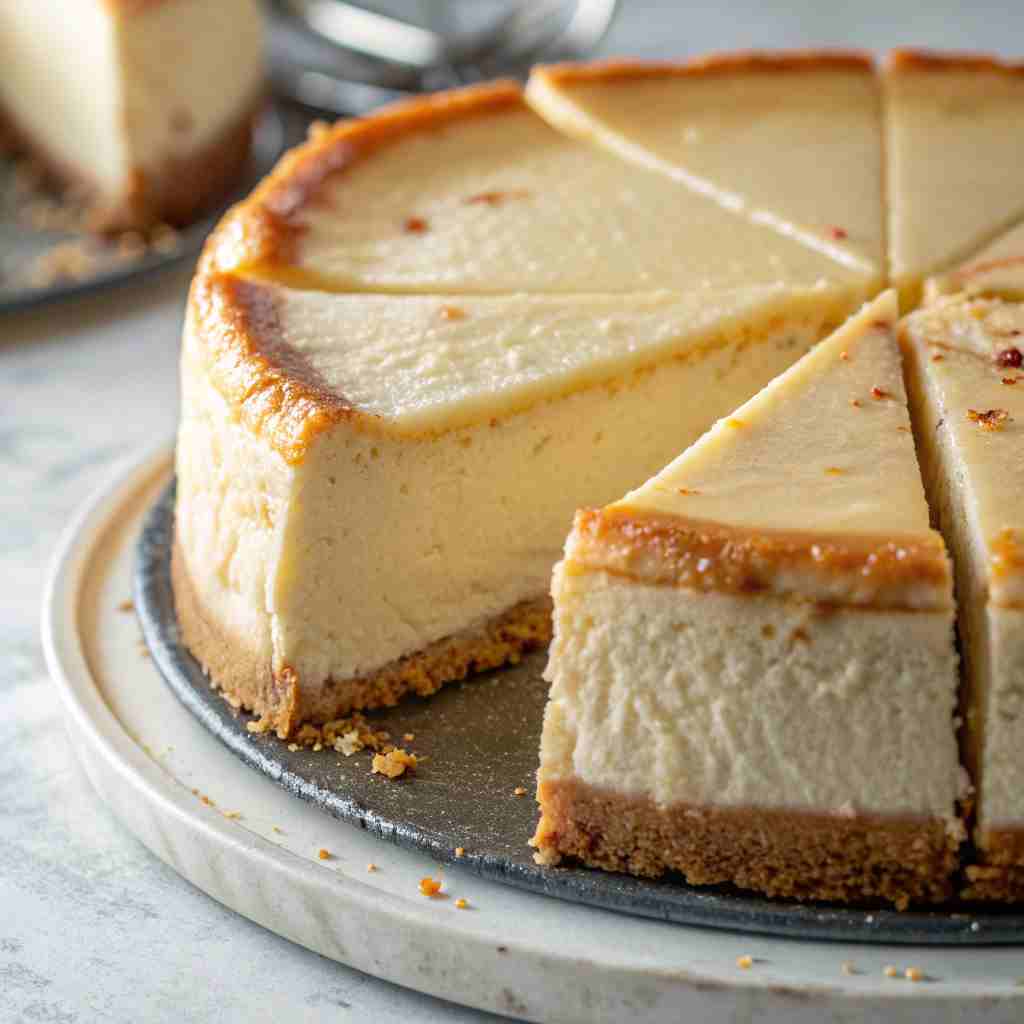
The phrase “Classic New York Cheesecake” evokes images of a dessert so rich, so velvety, and so utterly satisfying that it transcends mere indulgence. And today, I’m thrilled to share with you the definitive guide to creating this iconic dessert right in your own kitchen. This post provides a detailed, step-by-step recipe for a truly Classic New York Cheesecake, a dense and creamy masterpiece that will rival any bakery creation. Get ready to impress your taste buds and everyone lucky enough to share a slice of this magnificent dessert.
Key Ingredients for Classic New York Cheesecake
Here’s everything you’ll need to create this iconic dessert, with precise measurements for perfection:
For the Graham Cracker Crust:
- 1 ½ cups (180g) graham cracker crumbs (about 12-15 full crackers)
- ¼ cup (50g) granulated sugar
- 6 tablespoons (85g) unsalted butter, melted
For the Cheesecake Filling:
- 4 (8-ounce) packages (900g) full-fat cream cheese, softened at room temperature
- 1 ½ cups (300g) granulated sugar
- ¼ cup (30g) all-purpose flour
- 1 teaspoon vanilla extract (high-quality for best flavor)
- ½ teaspoon lemon zest (from about 1 small lemon, optional but recommended)
- Pinch of salt
- 5 large eggs, at room temperature
- 1 cup (240g) sour cream, at room temperature
How to Make Classic New York Cheesecake
Creating this Classic New York Cheesecake is surprisingly straightforward, delivering a dessert that is not only easy to make but also incredibly delicious and satisfying. Its hallmark is the luxurious, dense, and creamy texture that melts in your mouth, perfectly balanced by the subtle tang of sour cream and a hint of vanilla. The simplicity of assembly combined with the profound depth of flavor makes this recipe a true standout. Expect around 30 minutes of active preparation time, with about 1 hour and 15 minutes of baking, plus essential chilling time.
● Step-by-Step Instructions:
Follow these detailed steps to achieve cheesecake perfection:
Prepare for Baking: Preheat your oven to 325°F (160°C). Wrap the outside of a 9-inch springform pan with heavy-duty aluminum foil, covering the bottom and sides completely to prevent water from seeping in during the water bath. Lightly grease the inside.
Make the Graham Cracker Crust: In a medium bowl, combine the graham cracker crumbs and granulated sugar. Pour in the melted butter and mix well until the crumbs are evenly moistened. Press the mixture firmly and evenly into the bottom of the prepared springform pan. You can use the bottom of a glass to help compact it. Bake the crust for 8-10 minutes, then remove it from the oven and let it cool while you prepare the filling.
Prepare the Water Bath: Bring a pot of water to a simmer. You’ll need enough to go about halfway up the sides of your springform pan later.
Create the Cheesecake Filling:
- In a large bowl, using an electric mixer (stand or hand-held) on low speed, beat the softened cream cheese until it’s completely smooth and creamy, with no lumps. This is crucial for a smooth cheesecake.
- Gradually add the granulated sugar, mixing on low speed until just combined. Don’t overmix.
- Sprinkle in the all-purpose flour, vanilla extract, lemon zest (if using), and salt. Mix on low speed until just incorporated. The flour helps prevent cracking.
- Add the eggs one at a time, mixing on low speed after each addition until just combined. Scrape down the sides of the bowl as needed. Overmixing at this stage can incorporate too much air, leading to cracks.
- Finally, gently fold in the sour cream until just barely combined. The goal is to keep the mixture as smooth and air-free as possible.
Fill the Pan and Bake: Pour the cheesecake filling over the cooled graham cracker crust in the springform pan. Smooth the top with a spatula.
Bake in a Water Bath: Carefully place the springform pan into a larger roasting pan. Pour the simmering water into the roasting pan, ensuring it comes about halfway up the sides of the springform pan.
Bake the Cheesecake: Carefully transfer the roasting pan with the cheesecake to the preheated oven. Bake for 1 hour and 15 minutes to 1 hour and 30 minutes, or until the edges are set but the center still jiggles slightly when gently shaken.
Cooling Process (Crucial!): Turn off the oven, but leave the cheesecake inside with the oven door ajar for 1 hour. This slow cooling prevents drastic temperature changes that can cause cracking. After 1 hour, remove the cheesecake from the oven and the water bath. Carefully unwrap the foil. Let it cool completely on a wire rack at room temperature for another 1-2 hours.
Chill Thoroughly: Once cooled to room temperature, cover the cheesecake loosely with plastic wrap and refrigerate for at least 6 hours, or preferably overnight. Chilling is essential for setting the texture and enhancing the flavor.
Serve: When ready to serve, carefully run a thin knife around the edge of the pan before releasing the springform. Slice with a hot, dry knife for clean cuts.
Why You’ll Love This Classic New York Cheesecake
You’ll quickly fall in love with this Classic New York Cheesecake because its main highlight is its undeniably luxurious, dense, and velvety texture, a hallmark of true New York-style perfection. The subtle tang from the sour cream beautifully balances the sweet richness of the cream cheese, while a hint of vanilla and lemon zest elevate the flavor profile to an extraordinary level. Making this iconic dessert at home offers significant cost savings compared to buying it from a high-end bakery, allowing you to enjoy gourmet quality without the gourmet price tag.
Beyond the savings, the satisfaction of creating such a magnificent dessert from scratch is immeasurable. This recipe is a testament to the fact that home baking can achieve results that are not only delicious but also deeply rewarding. If you enjoy the rich simplicity of this Classic New York Cheesecake, you might also like exploring our recipe for a Decadent Chocolate Lava Cake, which offers a similar depth of flavor in a different form. We encourage you to roll up your sleeves, embrace the process, and discover the joy of baking your own show-stopping dessert. Trust us, your taste buds (and your wallet) will thank you!
What to Serve Classic New York Cheesecake With
This Classic New York Cheesecake is a star on its own, but it truly shines when paired with complementary elements:
- Fresh Berries: A medley of fresh strawberries, blueberries, raspberries, or blackberries provides a bright, tart contrast to the rich sweetness of the cheesecake.
- Fruit Coulis: A vibrant raspberry or strawberry coulis (a simple fruit sauce) drizzled over each slice adds a touch of elegance and a burst of fruit flavor.
- Chocolate Sauce: A decadent homemade chocolate ganache or a store-bought chocolate sauce is a classic pairing, offering a rich counterpoint.
- Caramel Sauce: A luscious caramel sauce, perhaps with a sprinkle of sea salt, elevates the dessert to another level of indulgence.
- Whipped Cream: A dollop of lightly sweetened homemade whipped cream provides a cloud-like texture and balances the density of the cheesecake.
- Coffee or Espresso: A strong cup of coffee or a shot of espresso is the perfect beverage to accompany such a rich dessert, cleansing the palate between bites.
Top Tips for Perfecting Classic New York Cheesecake
Achieving that perfect, crack-free, dense, and creamy Classic New York Cheesecake is all about technique and a few key insights:
- Room Temperature Ingredients are Non-Negotiable: This is arguably the most crucial tip. Ensure your cream cheese, eggs, and sour cream are at true room temperature (around 68-72°F or 20-22°C). Cold ingredients won’t emulsify properly, leading to a lumpy batter and a less smooth texture, and can also incorporate too much air. Take them out of the fridge at least 1-2 hours before you plan to start baking.
- Do NOT Overmix the Filling: Overmixing is the primary culprit for cracks in cheesecakes. When you beat cream cheese excessively, or add eggs and continue to beat vigorously, you incorporate too much air into the batter. This air expands during baking, then collapses as the cheesecake cools, leading to unsightly cracks. Mix on low speed, only until ingredients are just combined. Scrape down the bowl frequently.
- The Water Bath is Your Best Friend: The water bath (bain-marie) creates a moist, humid environment in the oven, which promotes even baking and prevents the cheesecake from drying out too quickly on the edges. This even temperature distribution is key to avoiding cracks and achieving that signature creamy texture. Ensure your springform pan is well-wrapped in heavy-duty foil to prevent water leakage.
- Slow Cooling Prevents Cracks: Drastic temperature changes are another enemy of a perfect cheesecake. Leaving the cheesecake in the turned-off oven with the door propped open for an hour allows it to gradually adjust to room temperature. This slow cooling process minimizes thermal shock and significantly reduces the risk of cracking.
- Thorough Chilling is Essential: A cheesecake isn’t truly ready until it has chilled thoroughly, ideally overnight (6-8 hours minimum). Chilling allows the cheesecake to fully set, firm up, and develop its dense, creamy texture. It also deepens and melds the flavors. Impatience here will result in a soft, less satisfying slice.
- Ingredient Substitutions (Use with Caution): For the crust, you can substitute other cookie crumbs like shortbread, vanilla wafers, or even chocolate cookies. For the filling, while full-fat cream cheese is highly recommended for the classic texture, some bakers may opt for reduced-fat, though the result will be less dense and rich. Do not substitute Greek yogurt for sour cream, as the acidity and consistency will be different.
- Clean Slices: For perfectly clean slices, dip a sharp, thin knife into hot water, wipe it dry, and then slice. Repeat this for each cut.
Storing and Reheating Tips
Proper storage is key to maintaining the exquisite taste and texture of your Classic New York Cheesecake.
- Storage in the Refrigerator: Your cheesecake should always be stored in an airtight container or tightly wrapped with plastic wrap in the refrigerator. This prevents it from absorbing odors from other foods and keeps it fresh. When stored correctly, it will remain fresh for up to 5-7 days.
- Freezing for Longer Storage: For longer storage, cheesecake freezes beautifully.
- To freeze individual slices: Place slices on a baking sheet lined with parchment paper and freeze until solid (about 1-2 hours). Once solid, wrap each slice tightly in plastic wrap, then an additional layer of aluminum foil. Store in a freezer-safe bag or container.
- To freeze a whole cheesecake: Ensure the cheesecake is completely cooled and chilled. You can either freeze it without any toppings or, if it has a firmer topping, you can freeze it with. Place the cheesecake (still on the springform base, if possible) in the freezer for about an hour until firm. Then, remove it and wrap it very tightly with several layers of plastic wrap, followed by a layer of aluminum foil.
- Frozen cheesecake will maintain its quality for up to 1-2 months. While safe to eat beyond this, the quality might start to decline.
- Reheating (Thawing) Instructions: Cheesecake is generally not reheated; instead, it is thawed.
- From the refrigerator: Serve directly from the fridge.
- From the freezer:
- Whole cheesecake: Transfer the wrapped cheesecake to the refrigerator and let it thaw slowly overnight, or for at least 8-12 hours. This gradual thawing helps maintain its texture.
- Individual slices: Place wrapped slices in the refrigerator to thaw for a few hours. Alternatively, for a quicker thaw, you can unwrap a slice and let it sit at room temperature for 30-60 minutes, though the refrigerator thaw is preferred for texture.
- Avoid Microwaving: Do not attempt to thaw or warm cheesecake in the microwave, as it will alter the texture and can make it rubbery and oily. Always opt for slow thawing in the refrigerator.
Final Thoughts
Crafting a Classic New York Cheesecake is more than just a recipe; it’s an experience, a journey into the heart of a dessert icon. With its dense, creamy texture and rich, tangy flavor, this cheesecake stands as a testament to the simple elegance of timeless baking. It’s a labor of love, yes, but the reward—a perfectly baked, utterly satisfying slice of perfection—is immeasurable. Whether you’re making it for a special occasion or simply to treat yourself, this recipe promises success and a truly unforgettable dessert. So go ahead, bake with confidence, and savor every magnificent bite of your homemade New York masterpiece.
try also :
- Lentil and Sweet Potato Salad
- Cranberry Brie Bites
- Crispy Sweet Potato Bites
- Matcha Cake Recipe
- find more in Pinterest
Classic New York Cheesecake FAQs
Q1: Why did my cheesecake crack?
A1: Cracks are usually caused by overmixing the batter, which incorporates too much air, or by drastic temperature changes during baking and cooling. Ensure ingredients are at room temperature, mix minimally, use a water bath, and cool the cheesecake very slowly in the oven with the door ajar.
Q2: Can I use low-fat cream cheese?
A2: While you can, it’s not recommended for a true Classic New York Cheesecake. Full-fat cream cheese is essential for achieving the dense, rich, and creamy texture that defines this iconic dessert. Low-fat alternatives will result in a less luxurious, sometimes drier, texture.
Q3: How do I know when the cheesecake is done baking?
A3: The edges should be set, but the center (about 2-3 inches in diameter) should still jiggle slightly like a soft-set custard when you gently shake the pan. The residual heat will continue to cook it during the slow cooling process.
Q4: Can I make the crust gluten-free?
A4: Absolutely! Simply substitute gluten-free graham cracker crumbs (or a similar gluten-free cookie crumb) for the regular graham cracker crumbs. The rest of the crust recipe remains the same.
Q5: How far in advance can I make this cheesecake?
A5: This cheesecake is an excellent make-ahead dessert. You can prepare it 1-2 days in advance, storing it well-wrapped in the refrigerator. In fact, the flavors often meld and improve after a day or two of chilling.