
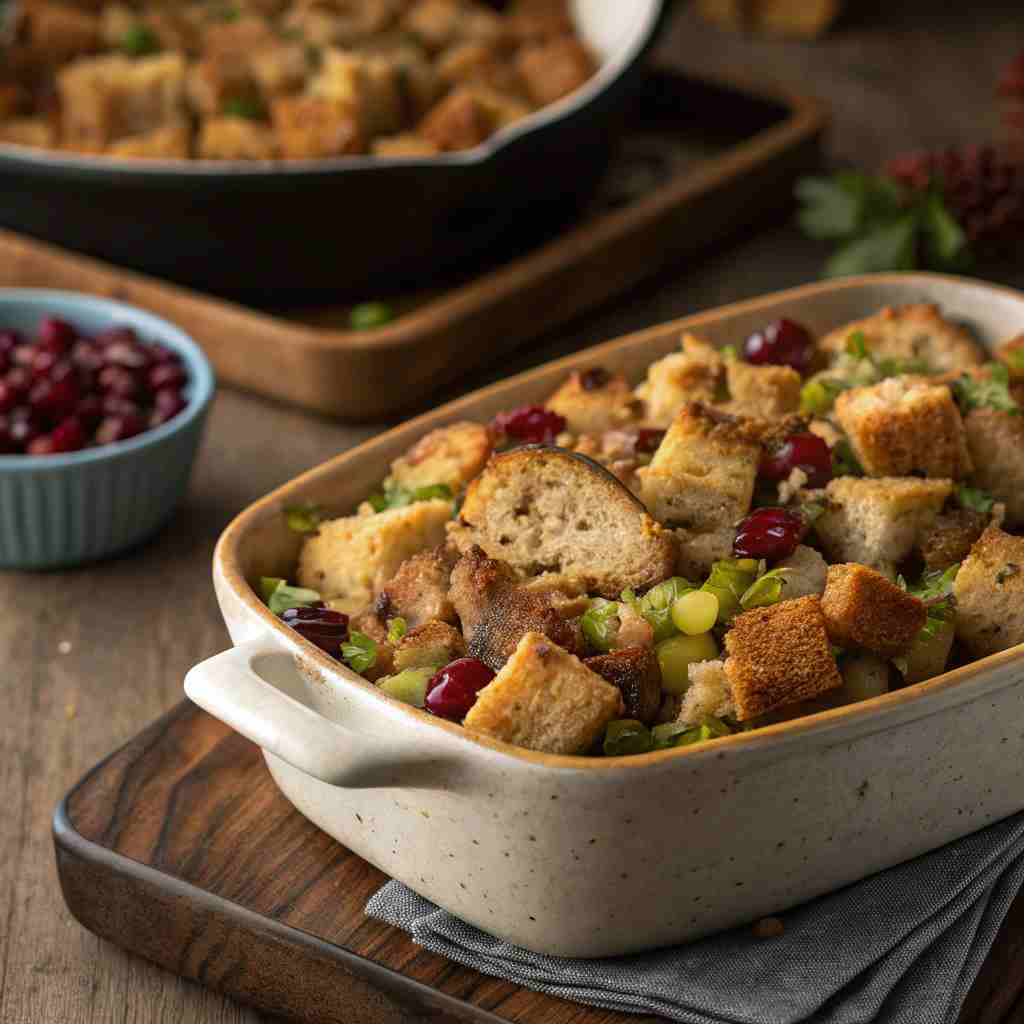
Are you searching for the quintessential side dish that embodies the spirit of the holidays? Look no further than this Classic Thanksgiving Stuffing Recipe. This isn’t just any stuffing; it’s a timeless Traditional Herb Dressing that will anchor your Thanksgiving feast, offering a savoury, aromatic, and comforting experience that harkens back to cherished family gatherings. This recipe is your go-to guide for creating a stuffing that’s both deeply flavourful and incredibly satisfying.
Key Ingredients for Classic Thanksgiving Stuffing Recipe
To craft the perfect Classic Thanksgiving Stuffing, you’ll need the following ingredients, carefully chosen for their flavour and texture contributions:
- 1 pound (about 16 slices) Stale White Bread: Day-old or dried bread is crucial. You can cut fresh bread into 1-inch cubes and leave it out uncovered overnight, or bake it at 250°F (120°C) for 15-20 minutes until dry but not toasted.
- 1 cup (2 sticks) Unsalted Butter: Divided; 1/2 cup for sautéing vegetables, 1/2 cup melted for tossing with bread.
- 2 cups Chopped Yellow Onion (about 1 large): Finely diced for even cooking and flavour distribution.
- 2 cups Chopped Celery (about 4 stalks): Adds a subtle earthy flavour and essential texture.
- 1 tablespoon Minced Fresh Sage: Fresh herbs are a must for that authentic Thanksgiving aroma.
- 1 tablespoon Minced Fresh Thyme: Complements the sage beautifully.
- 1 teaspoon Minced Fresh Rosemary: Use sparingly, as its flavour is potent.
- 1 teaspoon Salt: Or to taste; kosher salt is recommended.
- 1/2 teaspoon Black Pepper: Freshly ground, for best flavour.
- 2 ½ cups Chicken Broth (low sodium): Or vegetable broth, for moisture and flavour. Adjust as needed.
- 2 Large Eggs: Lightly beaten, to bind the stuffing and add richness. Optional, for a firmer texture.
- Optional Add-ins: 1 cup chopped cooked sausage, 1 cup chopped apples, 1/2 cup dried cranberries for added flavour and texture variations.
How to Make Classic Thanksgiving Stuffing Recipe
This Classic Thanksgiving Stuffing recipe is designed to be easy, delicious, and deeply satisfying. It’s wonderfully simple to assemble, offering rich, savoury flavours from a medley of fresh herbs and butter-sautéed vegetables, all brought together in a comforting, moist texture. In just about 20 minutes of active prep time and 40-50 minutes of baking, you’ll have a heartwarming side dish ready for your holiday table.
Step-by-Step Instructions:
- Prepare the Bread: If your bread isn’t already stale, cut it into 1-inch cubes. Spread the cubes on a large baking sheet and leave them uncovered overnight, or bake them in a 250°F (120°C) oven for 15-20 minutes until they are dry but not browned. Transfer the dried bread cubes to a large mixing bowl.
- Sauté Aromatics: In a large skillet or Dutch oven, melt 1/2 cup (1 stick) of unsalted butter over medium heat. Add the chopped onions and celery. Cook, stirring occasionally, until the vegetables are softened and translucent, about 8-10 minutes.
- Add Herbs and Seasoning: Stir in the fresh sage, thyme, and rosemary. Cook for another 1-2 minutes until fragrant. Season with salt and black pepper.
- Combine Ingredients: Pour the sautéed vegetable and herb mixture over the dried bread cubes in the large mixing bowl. Add any optional ingredients like cooked sausage, chopped apples, or dried cranberries at this stage. Make sure to distribute everything evenly.
- Moisten the Stuffing: In a separate small bowl, whisk together the chicken broth and lightly beaten eggs (if using). Pour this liquid mixture over the bread and vegetable mixture. Gently toss everything together with your hands or a large spoon until the bread cubes are evenly moistened. Be careful not to over-mix, as this can make the stuffing dense.
- Prepare for Baking: Melt the remaining 1/2 cup (1 stick) of unsalted butter. Drizzle this melted butter over the stuffing mixture and toss gently to coat. This adds extra flavour and helps create a crispy top.
- Bake the Stuffing: Transfer the stuffing mixture to a lightly buttered 9×13-inch baking dish. For a moister stuffing, cover the dish tightly with foil and bake for 30 minutes. For a crispier topping, bake uncovered for the entire duration, or remove the foil for the last 15-20 minutes of baking. Bake in a preheated 375°F (190°C) oven for 40-50 minutes, or until the stuffing is golden brown on top and heated through.
- Serve: Remove from the oven and let rest for a few minutes before serving. Enjoy your delicious Classic Thanksgiving Stuffing!
Why You’ll Love This Classic Thanksgiving Stuffing Recipe
You’ll truly adore this Classic Thanksgiving Stuffing Recipe because its main highlight is the unparalleled combination of aromatic herbs and tender, savoury bread, creating a dish that’s both comforting and elevated. Making it yourself offers significant cost-saving benefits compared to store-bought versions, allowing you to use fresh, high-quality ingredients without breaking the bank.
The flavorful toppings, like the golden-brown crispy top achieved from baking, and the rich depth from sautéed onions, celery, and fresh sage, thyme, and rosemary, make every bite special. While this traditional dressing is a must-have, if you’re looking for another comforting side, our “Creamy Garlic Mashed Potatoes” recipe offers a similarly satisfying experience. Give this stuffing a try; your holiday table (and your taste buds) will thank you!
What to Serve Classic Thanksgiving Stuffing With
This Classic Thanksgiving Stuffing Recipe is incredibly versatile and pairs beautifully with a variety of holiday dishes and beyond. Here are a few suggestions to create a harmonious and delicious meal:
- Roasted Turkey or Chicken: The quintessential pairing! The savoury, herbaceous stuffing acts as the perfect counterpoint to the rich flavour of roasted poultry.
- Gravy: A generous drizzle of homemade turkey or chicken gravy is absolutely essential. It adds moisture and enhances the overall savoury profile.
- Cranberry Sauce: The tartness of cranberry sauce (homemade or store-bought) provides a refreshing contrast to the stuffing’s richness.
- Green Bean Casserole: Another holiday classic, a creamy green bean casserole complements the stuffing with its different texture and flavour profile.
- Sweet Potato Casserole: For a balance of sweet and savoury, a sweet potato casserole offers a delightful contrast.
- Roasted Vegetables: Simple roasted Brussels sprouts, carrots, or asparagus can add a fresh, earthy element to the meal.
- Wine Pairing: For a festive touch, a light-bodied Pinot Noir, a crisp Chardonnay, or even a dry sparkling cider would be excellent beverage choices.
Top Tips for Perfecting Classic Thanksgiving Stuffing Recipe
Achieving the perfect Classic Thanksgiving Stuffing is easier than you think with these expert tips:
- Use Stale Bread: This is crucial! Fresh bread will absorb too much liquid and result in a mushy stuffing. Day-old bread provides the best texture, as its dryness allows it to soak up the broth and butter without becoming soggy. If you don’t have stale bread, cube fresh bread and bake it at 250°F (120°C) for 15-20 minutes until dry but not coloured.
- Don’t Skimp on Butter: Butter is key to flavour and moisture. It carries the herb flavours and creates a rich mouthfeel. Using both melted butter to sauté vegetables and drizzling more over the mixture before baking will enhance the taste and texture.
- Fresh Herbs are Best: While dried herbs can be used in a pinch (use about one-third the amount of fresh), fresh sage, thyme, and rosemary provide a significantly more vibrant and authentic flavour. Chop them finely to distribute their aroma evenly.
- Sauté Vegetables Thoroughly: Cook the onions and celery until they are very soft and translucent. This sweetens them and ensures they don’t have a raw crunch in the finished stuffing.
- Moisture Balance is Key: The amount of broth needed can vary depending on the dryness of your bread. Add the broth gradually, tossing after each addition, until the bread cubes are evenly moistened but not swimming in liquid. You want them damp, not soggy.
- Bind with Eggs (Optional but Recommended): Lightly beaten eggs help bind the stuffing together, especially if you prefer a firmer, more sliceable texture. If you omit them, your stuffing will be more crumbly.
- Adjust Seasoning: Taste the mixture before baking! This is your chance to adjust salt, pepper, and herbs to your preference. Remember, the flavours will intensify slightly during baking.
- Baking Covered vs. Uncovered: For a moister stuffing, bake covered with foil for the initial period, then remove the foil for the last 15-20 minutes to develop a golden, crispy top. If you prefer a uniformly crispier stuffing, bake it uncovered for the entire time.
- Avoid Over-Stuffing the Bird: If stuffing a turkey, only do so just before roasting, and ensure the stuffing reaches 165°F (74°C) to be safe. It’s often recommended to bake stuffing in a separate dish for better food safety and consistency. This recipe is designed for separate baking.
- Don’t Pack Too Tightly: When transferring the mixture to the baking dish, spread it loosely. Packing it too tightly can result in a dense, heavy stuffing rather than light and fluffy.
Storing and Reheating Tips
Proper storage and reheating are essential to enjoy your Classic Thanksgiving Stuffing Recipe leftovers safely and deliciously.
Storing Cooked Stuffing:
- Refrigeration: Once your stuffing has cooled completely (within 2 hours of baking), transfer it to an airtight container. It can be safely stored in the refrigerator for up to 3-4 days. Prompt cooling is critical to prevent bacterial growth.
- Freezing: For longer storage, freeze the stuffing. Place cooled stuffing into freezer-safe airtight containers or heavy-duty freezer bags. You can freeze it as a whole batch or portion it out for individual servings. It will keep well in the freezer for up to 1 month. While it might last longer, the quality (especially texture) can degrade after this period.
Reheating Cooked Stuffing:
- From the Refrigerator:
- Oven (Recommended): This method helps maintain texture and crispiness. Preheat your oven to 300°F (150°C). Place the stuffing in an oven-safe dish, cover it with foil (to prevent drying out), and bake for 20-30 minutes, or until heated through. For a crispier topping, remove the foil for the last 5-10 minutes.
- Microwave: For quick individual servings, microwave on medium power in 1-minute intervals, stirring in between, until heated through. Be aware that this method can make the stuffing softer and less crispy. Add a splash of broth if it seems dry.
- From the Freezer:
- Thawing: It’s best to thaw frozen stuffing overnight in the refrigerator before reheating.
- Oven: Once thawed, reheat in the oven at 300°F (150°C) as described above, covering with foil and then removing it to crisp up. It may take slightly longer than refrigerated stuffing.
- Do not reheat frozen stuffing in the microwave for large portions, as it won’t heat evenly and can become gummy.
Tips for Optimal Reheating:
- Add Moisture: If your stuffing seems dry during reheating, especially in the oven, sprinkle a tablespoon or two of chicken or vegetable broth over it before covering.
- Crispiness: If you love a crispy top, always finish reheating in the oven uncovered for the last few minutes.
Final Thoughts
This Classic Thanksgiving Stuffing Recipe is more than just a side dish; it’s a culinary cornerstone of holiday feasting, embodying tradition, comfort, and deep, savoury flavours. It brings families to the table, creating memories with every aromatic bite. Crafting this Traditional Herb Dressing from scratch allows you to control the quality of ingredients, ensuring a wholesome and incredibly flavourful result that store-bought versions simply can’t match.
Whether it’s the golden-brown crust, the tender herbed interior, or the irresistible aroma filling your kitchen, this stuffing promises to be a standout. Embrace the process, savour the scent of fresh herbs and butter, and delight in creating a dish that will be cherished by all your guests. This Thanksgiving, let this classic recipe be the heart of your holiday meal, a testament to the warmth and generosity of homemade goodness.
try also :
- Lentil and Sweet Potato Salad
- Cranberry Brie Bites
- Crispy Sweet Potato Bites
- Matcha Cake Recipe
- find more in Pinterest
Classic Thanksgiving Stuffing Recipe FAQs
Q1: Can I make this stuffing ahead of time?
A1: Yes, absolutely! You can prepare the stuffing mixture (combining all ingredients except the melted butter drizzle) a day in advance. Store it covered in the refrigerator. On Thanksgiving day, transfer it to your baking dish, drizzle with melted butter, and bake as directed. This is a common strategy to reduce holiday stress.
Q2: What kind of bread is best for stuffing?
A2: Stale white bread is traditional and highly recommended. Good options include French bread, Italian bread, or sourdough. The key is for the bread to be dry (stale) so it can absorb the liquid without becoming soggy. Avoid soft sandwich bread, as it tends to break down too much.
Q3: Can I add meat to this stuffing?
A3: Yes, you can! Cooked and crumbled breakfast sausage, ground pork, or even chopped bacon are popular additions. Sauté your chosen meat with the onions and celery to infuse the flavours throughout the dish. About 1 cup of cooked meat per recipe is usually sufficient.
Q4: Is this stuffing suitable for vegetarians?
A4: Yes, it is! Simply replace the chicken broth with vegetable broth to make this recipe vegetarian-friendly. The base recipe is already meat-free.
Q5: How can I make my stuffing gluten-free?
A5: To make this recipe gluten-free, simply substitute the white bread with a good quality gluten-free bread. Ensure it is stale or dried out before use, just like regular bread, to prevent a mushy texture.
Q6: My stuffing turned out dry. What went wrong?
A6: Stuffing can become dry if it didn’t have enough liquid initially or if it was baked uncovered for too long. Next time, ensure the bread cubes are thoroughly moistened (damp, not soggy) before baking. If baking uncovered, keep an eye on it and consider covering it for part of the baking time to retain moisture.
Q7: My stuffing is soggy. How can I fix it?
A7: Soggy stuffing usually means too much liquid was added, or the bread wasn’t stale enough. For a current batch, you can try baking it uncovered for a longer time to allow some moisture to evaporate and create a crisper exterior. For future attempts, ensure your bread is properly stale and add broth gradually until just moistened.
Q8: Can I bake this stuffing inside the turkey?
A8: While traditionally done, baking stuffing inside the turkey carries food safety risks and can result in unevenly cooked stuffing. For safety and a better texture, it is generally recommended to bake stuffing in a separate dish, as outlined in this recipe, ensuring it reaches an internal temperature of 165°F (74°C).