
If you’re searching for the ultimate dessert that transports your taste buds to a sun-drenched beach with every bite, then this Coconut Cream Cheesecake recipe is exactly what you need. This post will guide you through creating a decadent, creamy, and irresistibly tropical cheesecake that will impress everyone fortunate enough to try it. Get ready to indulge in a slice of paradise!
Key Ingredients for Coconut Cream Cheesecake
Here’s a detailed list of all the ingredients you’ll need to create this dreamy tropical dessert. Precision in measurements and quality ingredients are key to a spectacular Coconut Cream Cheesecake.
For the Crust:
- 1 ½ cups (180g) crushed graham cracker crumbs: You can use a food processor or a Ziploc bag and a rolling pin for this.
- ¼ cup (50g) granulated sugar: Adds a touch of sweetness to the crust.
- ½ cup (113g) unsalted butter, melted: Binds the crumbs together and creates a rich base.
For the Coconut Cheesecake Filling:
- 2 (8-ounce/226g each) packages full-fat cream cheese, softened: Essential for the classic cheesecake tang and creamy texture. Make sure it’s at room temperature to avoid lumps.
- 1 (13.5-ounce/400ml) can full-fat coconut milk, chilled and solids separated: Chilling the can allows the thick cream to separate from the water. You’ll primarily use the thick cream.
- 1 cup (200g) granulated sugar: For sweetness.
- 2 large eggs, room temperature: Binds the filling and adds richness.
- 1 teaspoon vanilla extract: Enhances the flavors.
- ½ teaspoon coconut extract (optional, but recommended): Boosts the coconut flavor significantly.
- ¼ cup (30g) unsweetened shredded coconut: Adds texture and an extra layer of coconut flavor within the filling.
For the Coconut Whipped Cream Topping (Optional):
- 1 (13.5-ounce/400ml) can full-fat coconut milk, chilled and solids separated: Use the thick cream from another chilled can.
- 2-3 tablespoons powdered sugar, to taste: Sweetens the whipped cream.
- ½ teaspoon vanilla extract: For flavor.
- Toasted shredded coconut, for garnish: For a beautiful presentation and added crunch.
- Fresh fruit (e.g., mango, pineapple, berries), for garnish: Adds freshness and color.
How to Make Coconut Cream Cheesecake
This Coconut Cream Cheesecake is surprisingly easy to make, delivering a deliciously satisfying dessert that’s perfect for any occasion. Its creamy texture, rich coconut flavor, and simple preparation make it a standout. You’ll love how the silky cheesecake rests on a buttery graham cracker crust, crowned with light coconut whipped cream. The estimated preparation time is about 30 minutes, with a total bake and chill time of around 6-8 hours, primarily for chilling.
Step-by-Step Instructions:
Prepare the Crust:
- Preheat oven to 350°F (175°C). Grease a 9-inch springform pan.
- In a medium bowl, combine the crushed graham cracker crumbs, granulated sugar, and melted butter. Mix until well combined and the crumbs resemble wet sand.
- Press the mixture firmly and evenly into the bottom of the prepared springform pan.
- Bake for 8-10 minutes, or until lightly golden. Remove from oven and let cool completely on a wire rack. Reduce oven temperature to 325°F (160°C).
Prepare the Coconut Cream from Cans:
- Carefully open the chilled cans of full-fat coconut milk. Scoop out only the thick, solid coconut cream from the top, leaving the watery liquid behind. Save the liquid for smoothies or other recipes.
Make the Cheesecake Filling:
- In a large mixing bowl, beat the softened cream cheese with an electric mixer on medium speed until smooth and creamy, about 2-3 minutes. Scrape down the sides of the bowl as needed.
- Add the granulated sugar and continue to beat until well combined and fluffy, about 1-2 minutes.
- Add the 1 cup of thick coconut cream (from the first can), vanilla extract, and optional coconut extract. Beat on low speed until just combined. Do not overmix.
- Add the eggs one at a time, beating on low speed after each addition until just incorporated. Be careful not to overmix, as this can incorporate too much air, leading to cracks in the cheesecake.
- Gently fold in the shredded coconut.
Bake the Cheesecake:
- Pour the cheesecake filling over the cooled crust in the springform pan. Gently tap the pan on the counter a few times to release any air bubbles.
- Optional Water Bath (recommended for crack-free cheesecake): Wrap the bottom and sides of the springform pan tightly with heavy-duty aluminum foil. Place the springform pan into a larger roasting pan. Pour hot water into the roasting pan until it comes about halfway up the sides of the springform pan.
- Bake for 50-60 minutes, or until the edges are set but the center still jiggles slightly when gently shaken.
- Turn off the oven and leave the cheesecake in the oven with the door slightly ajar for 1 hour. This helps prevent cracking.
- Remove the cheesecake from the oven (and water bath, if used) and transfer it to a wire rack to cool completely at room temperature.
Chill the Cheesecake:
- Once completely cooled, cover the cheesecake loosely with plastic wrap and refrigerate for at least 6 hours, or preferably overnight, to allow it to set properly.
Prepare the Coconut Whipped Cream Topping (if using):
- In a chilled large mixing bowl, scoop out the thick coconut cream from the second chilled can of coconut milk.
- Using an electric mixer, beat the coconut cream on high speed until light and fluffy, about 3-5 minutes.
- Add powdered sugar and vanilla extract, beating until just combined and smooth.
Serve:
- Carefully run a thin knife around the edge of the cheesecake before releasing the springform pan sides.
- Top slices of Coconut Cream Cheesecake with coconut whipped cream, a sprinkle of toasted shredded coconut, and fresh fruit, if desired.
Why You’ll Love This Coconut Cream Cheesecake
You’ll adore this Coconut Cream Cheesecake for its unparalleled ability to transport you to a tropical oasis with every luscious bite. The main highlight is its incredibly smooth, rich, and intensely coconut-flavored filling that perfectly balances sweetness with a subtle tang. Making this delectable treat at home offers significant cost-saving benefits compared to purchasing a gourmet cheesecake, plus you get the satisfaction of creating something truly special. The delightful combination of the buttery graham cracker crust, the creamy coconut cheesecake, and the light, fluffy coconut whipped cream topping creates a textural and flavor masterpiece. Add a sprinkle of toasted coconut and fresh mango, and you have a dessert that’s not just delicious, but a work of art.
If you enjoy the tropical notes in this cheesecake, you might also love our recipe for Mango Coconut Sticky Rice, which offers another fantastic way to experience these vibrant flavors. Don’t just dream of paradise; bake it! Take the plunge and try making this magnificent Coconut Cream Cheesecake today—your taste buds will thank you, and you’ll discover a new favorite.
What to Serve Coconut Cream Cheesecake With
This rich and creamy Coconut Cream Cheesecake shines on its own, but a few thoughtful accompaniments can elevate the experience even further.
- Fresh Tropical Fruits: Slices of fresh mango, pineapple, kiwi, or a medley of berries complement the coconut flavor beautifully with their natural sweetness and acidity.
- Fruit Sauces: A light passion fruit coulis, raspberry sauce, or a simple warm caramel drizzle would be exquisite.
- Coffee or Tea: Pair it with a strong espresso, a creamy latte, or a fragrant herbal tea to balance the richness.
- Tropical Cocktails: For a truly indulgent experience, serve alongside a piña colada, a virgin mojito, or a refreshing rum punch.
Top Tips for Perfecting Coconut Cream Cheesecake
Crafting the perfect Coconut Cream Cheesecake is largely about patience and attention to detail. Here are some invaluable tips to ensure your dessert turns out flawless every time:
- Room Temperature Ingredients are Crucial: This is perhaps the most important tip. Ensure your cream cheese and eggs are at room temperature. Cold cream cheese will result in a lumpy batter, no matter how much you beat it, and cold eggs can cause the mixture to curdle or seize.
- Don’t Overmix the Batter: Overmixing incorporates too much air into the cheesecake filling. This extra air expands during baking, causing the cheesecake to puff up, and then collapse and crack as it cools. Mix just until combined for a smooth, dense, and crack-free texture.
- Chill Coconut Milk Thoroughly: For the best results with coconut whipped cream and the cheesecake filling, chill your cans of full-fat coconut milk in the refrigerator overnight. This allows the thick cream to separate from the liquid. Only use the thick cream for your recipe.
- Water Bath for Crack Prevention: While optional, a water bath creates a moist, consistent heat environment, which gently cooks the cheesecake and significantly reduces the chances of cracking. If you skip the water bath, be prepared for potential minor cracks, which can easily be covered with topping.
- Slow Cooling is Key: Sudden temperature changes are a cheesecake’s worst enemy. Leaving the cheesecake in the turned-off oven with the door ajar for an hour allows it to cool slowly and gradually, preventing drastic shrinkage and cracking.
- Chill for a Minimum of 6 Hours: Resist the urge to cut into your beautiful creation too early! The cheesecake needs ample time in the refrigerator to fully set and for the flavors to meld. Overnight chilling is always best for optimal texture and sliceability.
- Ingredient Substitutions:
- Crust: Instead of graham crackers, you can use shortbread cookies, ginger snaps, or vanilla wafers.
- Sweetener: For a slightly different flavor profile, you can substitute a portion of the granulated sugar with brown sugar in the crust.
- Extracts: If you don’t have coconut extract, don’t worry, the coconut milk provides plenty of flavor. You can also experiment with almond extract for a subtle nutty note.
Storing and Reheating Tips
Proper storage is essential to maintain the freshness, flavor, and texture of your Coconut Cream Cheesecake.
- Refrigeration: Store leftover Coconut Cream Cheesecake in an airtight container or covered tightly with plastic wrap in the refrigerator. It will stay fresh for up to 4-5 days. Ensure it’s well-sealed to prevent it from absorbing odors from other foods in the fridge.
- Freezing: Coconut Cream Cheesecake freezes beautifully! To freeze, first place the cheesecake (uncovered) in the freezer for about 1-2 hours, or until firm. This prevents the topping from sticking to the wrap. Once firm, wrap individual slices or the entire cheesecake tightly in plastic wrap, then an additional layer of aluminum foil. Label with the date. It can be stored in the freezer for up to 1 month.
- Thawing Frozen Cheesecake: To enjoy frozen cheesecake, transfer it to the refrigerator and let it thaw overnight (8-12 hours) before serving. Do not thaw at room temperature, as this can affect the texture.
- Reheating: A baked cheesecake is typically served chilled, so reheating is generally not recommended as it will alter the creamy texture. If you have a specific reason to warm it slightly (e.g., if you prefer a less cold dessert), allow a slice to sit at room temperature for 15-20 minutes before serving. Do not microwave the entire cheesecake or slices, as this will lead to an undesirable rubbery texture.
Final Thoughts
This Coconut Cream Cheesecake is more than just a dessert; it’s an edible vacation, a sweet escape to a place where the sun always shines and the flavors are bright. Whether you’re celebrating a special occasion or simply craving a taste of the tropics, this recipe delivers on all fronts. With its velvety texture, rich coconut aroma, and effortless charm, it’s bound to become a staple in your dessert repertoire. So, gather your ingredients, follow these simple steps, and prepare to be transported. Enjoy this slice of tropical bliss!
try also :
- Lentil and Sweet Potato Salad
- Cranberry Brie Bites
- Crispy Sweet Potato Bites
- Matcha Cake Recipe
- find more in Pinterest
Coconut Cream Cheesecake FAQs
Can I use light coconut milk instead of full-fat?
It is highly recommended to use full-fat coconut milk for both the cheesecake filling and the whipped cream topping. Light coconut milk will not provide the same richness or set properly.My cheesecake cracked! What did I do wrong?
Cracks are often caused by overmixing the batter (incorporating too much air), baking at too high a temperature, or cooling too quickly. Using a water bath and allowing the cheesecake to cool slowly in the oven with the door ajar can help prevent this.Can I make this cheesecake gluten-free?
Absolutely! Simply substitute gluten-free graham cracker crumbs (or a gluten-free cookie crumb) for the regular graham cracker crumbs in the crust.How do I separate the coconut cream from the water?
Chill the cans of full-fat coconut milk upside down in the refrigerator overnight. When you open the can, the thick cream will be at the bottom (originally the top) and can be easily scooped out, leaving the watery liquid behind.How far in advance can I make this cheesecake?
This cheesecake is perfect for making in advance! You can bake and refrigerate it up to 2-3 days before serving. The flavors often deepen and improve with a little extra chilling time.Can I add other fruits to the filling?
While the recipe focuses on pure coconut flavor, you could gently fold in finely diced, firm tropical fruits like mango or pineapple into the batter. However, too much moisture can affect the setting, so a better option might be to use them as a topping.
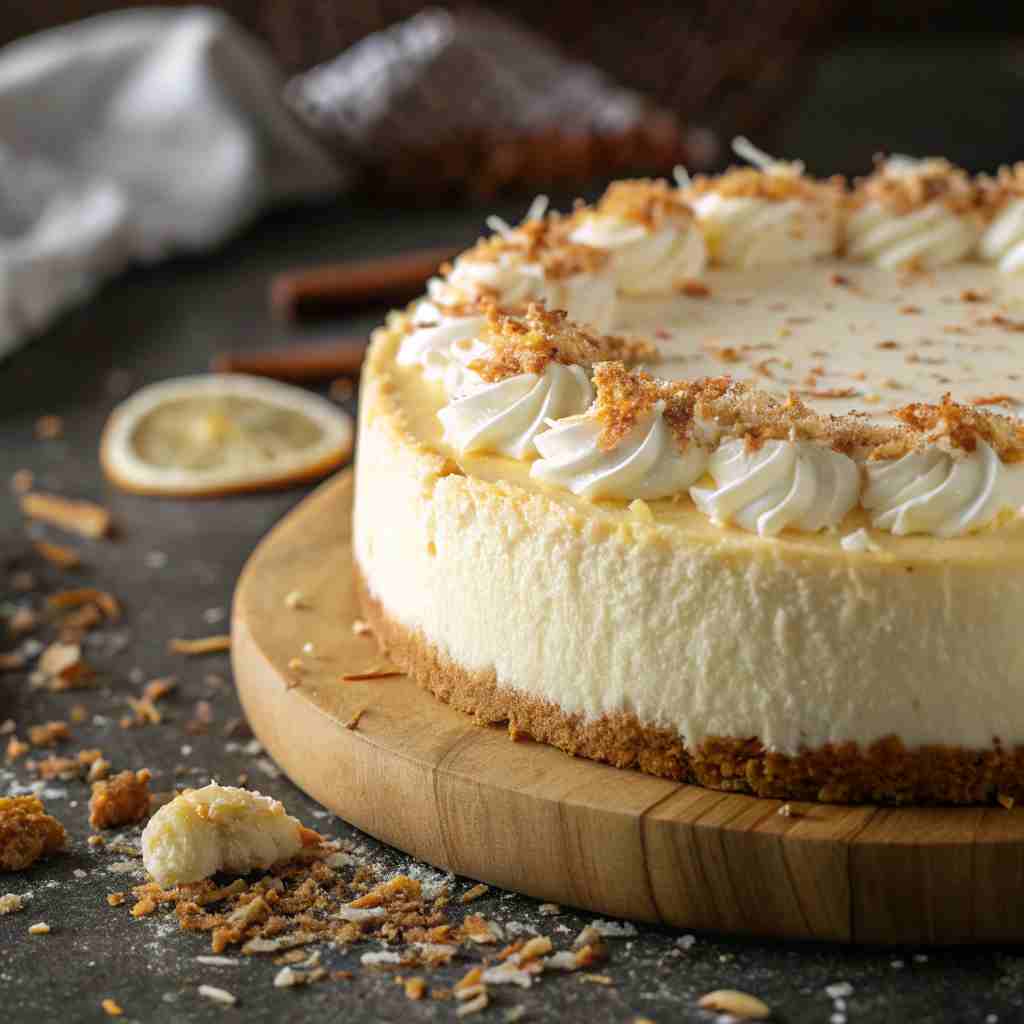
Coconut Cream Cheesecake
Ingredients
Equipment
Method
- Preheat oven to 350°F (175°C). Grease a 9-inch springform pan. In a medium bowl, combine the crushed graham cracker crumbs, granulated sugar, and melted butter. Mix until well combined. Press the mixture firmly into the bottom of the prepared springform pan. Bake for 8-10 minutes, or until lightly golden. Remove from oven and let cool completely on a wire rack. Reduce oven temperature to 325°F (160°C).1.5 cups crushed graham cracker crumbs, 0.25 cup granulated sugar, 0.5 cup unsalted butter, melted
- Carefully open the chilled cans of full-fat coconut milk. Scoop out only the thick, solid coconut cream from the top, leaving the watery liquid behind.1 can full-fat coconut milk, chilled and solids separated
- In a large mixing bowl, beat the softened cream cheese with an electric mixer until smooth and creamy. Add the granulated sugar and continue to beat until well combined. Add the 1 cup of thick coconut cream (from the first can), vanilla extract, and optional coconut extract. Beat on low speed until just combined. Add the eggs one at a time, beating on low speed after each addition until just incorporated. Gently fold in the shredded coconut.2 packages full-fat cream cheese, softened, 1 cup granulated sugar, 1 can full-fat coconut milk, chilled and solids separated, 1 tsp vanilla extract, 0.5 tsp coconut extract, 2 large eggs, room temperature, 0.25 cup unsweetened shredded coconut
- Pour the cheesecake filling over the cooled crust. Gently tap the pan on the counter a few times to release any air bubbles. (Optional Water Bath: Wrap bottom of pan with foil, place in roasting pan, add hot water halfway up sides). Bake for 50-60 minutes, or until edges are set but center still jiggles slightly. Turn off oven and leave cheesecake in oven with door slightly ajar for 1 hour. Remove and transfer to wire rack to cool completely at room temperature.
- Once completely cooled, cover cheesecake loosely with plastic wrap and refrigerate for at least 6 hours, or preferably overnight, to allow it to set properly.
- In a chilled large mixing bowl, scoop out the thick coconut cream from the second chilled can of coconut milk. Beat on high speed until light and fluffy. Add powdered sugar and vanilla extract, beating until just combined.1 can full-fat coconut milk, chilled and solids separated, 2-3 tbsp powdered sugar, to taste, 0.5 tsp vanilla extract
- Carefully run a thin knife around the edge of the cheesecake before releasing the springform pan sides. Top slices with coconut whipped cream, toasted shredded coconut, and fresh fruit, if desired.Toasted shredded coconut, for garnish, Fresh fruit (e.g., mango, pineapple, berries), for garnish