
This Garlic Herb Prime Rib recipe delivers an unforgettable centerpiece that’s surprisingly simple to master, perfect for making any gathering feel effortlessly gourmet. It’s an ideal choice for holiday dinners or special occasions, promising tender, flavorful results with minimal fuss.
Key Ingredients for Garlic Herb Prime Rib
- 1 (4-5 pound) boneless prime rib roast, well-trimmed
- 6 cloves garlic, minced
- 2 tablespoons fresh rosemary, finely chopped
- 2 tablespoons fresh thyme, finely chopped
- 1 tablespoon fresh sage, finely chopped (optional, but recommended for deeper flavor)
- 1 tablespoon coarse sea salt
- 1 teaspoon black pepper, freshly ground
- 2 tablespoons olive oil
- 1/2 cup beef broth or red wine (for pan drippings, optional)
How to Make Garlic Herb Prime Rib
Get ready to impress with this Garlic Herb Prime Rib—a dish that’s surprisingly easy to achieve, yet delivers a delicious, satisfying experience that tastes like it came from a five-star restaurant. Its rich, aromatic crust and melt-in-your-mouth interior are simply divine, making it a standout star for any meal with very little hands-on time. The preparation time for this masterpiece is about 20 minutes, with a cooking time of 1.5 to 2.5 hours, plus resting.
- Step-by-Step Instructions:
- Prepare the Roast: Remove the prime rib roast from the refrigerator at least 1-2 hours before cooking to allow it to come to room temperature. This ensures more even cooking. Pat the roast dry thoroughly with paper towels; a dry surface promotes a better crust.
- Make the Herb Paste: In a small bowl, combine the minced garlic, chopped rosemary, thyme, sage (if using), coarse sea salt, freshly ground black pepper, and olive oil. Mix well until a thick paste forms.
- Season the Roast: Generously rub the herb paste all over the entire surface of the prime rib roast. Make sure to get into all the crevices. For best results, you can do this step the night before and let the roast marinate in the refrigerator, covered. If marinating overnight, bring it to room temperature for 1-2 hours before roasting.
- Preheat Oven: Preheat your oven to a high temperature, 450°F (230°C). Place an oven-safe roasting rack in a shallow roasting pan.
- Sear the Roast (Optional but Recommended): For an extra crispy crust, you can sear the roast on all sides in a large, oven-safe skillet over high heat with 1-2 tablespoons of oil before transferring to the roasting pan. This step takes about 2-3 minutes per side.
- Initial High-Heat Roast: Place the seasoned prime rib fat-side up on the roasting rack in the preheated 450°F (230°C) oven for 15-20 minutes. This initial high heat creates a beautiful crust.
- Reduce Heat and Continue Roasting: After the initial high-heat roast, reduce the oven temperature to 325°F (160°C). Continue to roast until an internal thermometer inserted into the thickest part of the roast, away from the bone, reaches your desired doneness:
- Rare: 120-125°F (49-52°C)
- Medium-Rare: 125-130°F (52-54°C)
- Medium: 130-135°F (54-57°C)
- Remember, the temperature will rise by 5-10°F during resting.
A 4-5 pound boneless prime rib typically takes 1.5 to 2.5 hours at 325°F (160°C) after the initial sear.
- Rest the Roast: This is crucial! Once the desired internal temperature is reached, remove the prime rib from the oven, transfer it to a cutting board, and tent loosely with aluminum foil. Let it rest for at least 20-30 minutes before carving. Resting allows the juices to redistribute, resulting in a more tender and flavorful roast.
- Make Pan Drippings (Optional): While the roast rests, you can make a simple pan sauce. Carefully pour off any excess fat from the roasting pan, leaving behind the flavorful drippings. Place the pan on the stovetop over medium heat. Deglaze the pan with 1/2 cup beef broth or red wine, scraping up any browned bits from the bottom. Simmer for a few minutes until slightly reduced. Season to taste.
- Carve and Serve: Carve the prime rib against the grain into thick slices. Serve immediately with the pan drippings, if desired.
Why You’ll Love This Garlic Herb Prime Rib
You’re going to absolutely adore this Garlic Herb Prime Rib for its sheer elegance and impressive flavor profile, making any meal feel incredibly special. The main feature here is that golden-brown, garlicky herb crust, locking in irresistible juiciness and tender perfection that rivals any high-end steakhouse. Plus, making it at home is a fantastic way to enjoy a luxurious cut of meat without the hefty restaurant price tag, saving you money for other delightful things.
What truly sets this Garlic Herb Prime Rib apart are the fresh, aromatic herbs like rosemary and thyme, combined with robust garlic, which infuse every bite with an unforgettable savory depth. Unlike a simple roasted beef tenderloin, the prime rib offers a richer, more profound beefy flavor that’s simply divine. So, why not treat yourself and your loved ones to this incredible culinary experience? Give it a try, and prepare to be amazed!
What to Serve Garlic Herb Prime Rib With
This magnificent Garlic Herb Prime Rib pairs beautifully with a variety of classic and comforting sides. For a truly classic experience, consider serving it alongside creamy Garlic Mashed Potatoes or a rich Potato Gratin to soak up all those delicious pan drippings. A vibrant green vegetable like Roasted Asparagus with Lemon or Sautéed Green Beans with Toasted Almonds will add a fresh, crisp contrast. Don’t forget a warm, crusty Artisan Bread to complete the meal. To drink, a robust Cabernet Sauvignon or a crisp, dry Pinot Noir would complement the rich flavors perfectly.
Top Tips for Perfecting Garlic Herb Prime Rib
- Choose Wisely: Opt for a well-marbled prime rib roast; the fat marbling contributes significantly to its tenderness and flavor. A boneless roast is easier to carve, while bone-in can offer a richer flavor due to the bones.
- Room Temperature is Key: Always allow the roast to come to room temperature for at least 1-2 hours before cooking. This helps the roast cook more evenly from edge to center and reduces cooking time.
- Don’t Skimp on Seasoning: Be generous with your herb rub! Ensure it covers all surfaces for maximum flavor and that gorgeous crust. Press it firmly into the meat.
- Invest in a Meat Thermometer: An instant-read meat thermometer is your best friend when cooking prime rib. Eyeing doneness is difficult, and overcooking can ruin a prime cut. Always aim for a lower internal temperature than your desired final result, as the carryover cooking during resting will increase it by 5-10°F.
- The Power of Resting: Do NOT skip the resting period! This is perhaps the most crucial step. Resting allows the muscle fibers to relax and redistribute the juices throughout the roast, ensuring every slice is incredibly tender and moist. Tent it loosely with foil to keep it warm.
- High Heat Sear (Optional but Recommended): Starting with a high oven temperature for 15-20 minutes, or searing in a pan beforehand, creates an irresistible crispy, flavorful crust.
- Don’t Forget the Drippings: The pan drippings are a treasure trove of flavor! Use them to make a quick au jus or a simple gravy to serve alongside the carved roast.
- Carve Against the Grain: When carving, always cut against the grain of the meat. This shortens the muscle fibers, making each slice more tender and easier to chew.
Storing and Reheating Tips
To ensure your leftover Garlic Herb Prime Rib remains delicious, allow it to cool completely before storing. Wrap individual slices or larger pieces tightly in plastic wrap, then place them in an airtight container or a freezer-safe bag. It will stay fresh in the refrigerator for up to 3-4 days. For longer storage,
you can freeze the prime rib for up to 3 months; wrap it well in plastic wrap and then aluminum foil to prevent freezer burn. To reheat, the best method is to gently warm individual slices in a preheated oven at 250-275°F (120-135°C) until just warmed through, sometimes with a splash of beef broth to prevent drying. Avoid high heat, as it can make the meat tough and dry.
Final Thoughts
This Garlic Herb Prime Rib truly is a showstopper that promises a tender, flavorful experience every time. Don’t be intimidated by its fancy appearance; it’s surprisingly simple to achieve and perfect for any special occasion. Trust me, you’ll be so glad you tried making this at home!
try also :
- Lentil and Sweet Potato Salad
- Cranberry Brie Bites
- Crispy Sweet Potato Bites
- Matcha Cake Recipe
- find more in Pinterest
Garlic Herb Prime Rib FAQs
Q1: What cut of meat is best for prime rib?
A1: Prime rib typically refers to a rib roast, which can be found boneless or bone-in. Both are excellent, with bone-in often providing a slightly richer flavor. Look for good marbling (streaks of fat within the muscle) as this contributes to tenderness and flavor.
Q2: How do I know when my prime rib is done?
A2: The best way to determine doneness is by using an instant-read meat thermometer inserted into the thickest part of the roast, avoiding bone. For rare, aim for 120-125°F; medium-rare, 125-130°F; for medium, 130-135°F. Remember, the temperature will rise by 5-10°F during resting.
Q3: Is it necessary to rest the prime rib after cooking?
A3: Yes, absolutely! Resting the prime rib is crucial. It allows the juices, which have gathered in the center due to heat, to redistribute throughout the roast. Skipping this step will result in juices running out when you cut it, leading to a drier, less flavorful roast. Rest it, tented loosely with foil, for at least 20-30 minutes.
Q4: Can I prepare the herb rub in advance?
A4: Yes, you can prepare the herb rub several hours or even a day in advance. In fact, rubbing the prime rib with the herb paste and letting it sit in the refrigerator overnight can enhance the flavors even further. Just remember to bring the roast to room temperature before cooking.
Q5: What can I do with leftover prime rib?
A5: Leftover prime rib is fantastic! It can be used for delicious sandwiches, sliced thin for prime rib tacos or quesadillas, chopped into a hearty beef and barley soup, or even added to a frittata or hash. Reheat gently to avoid drying out the meat.
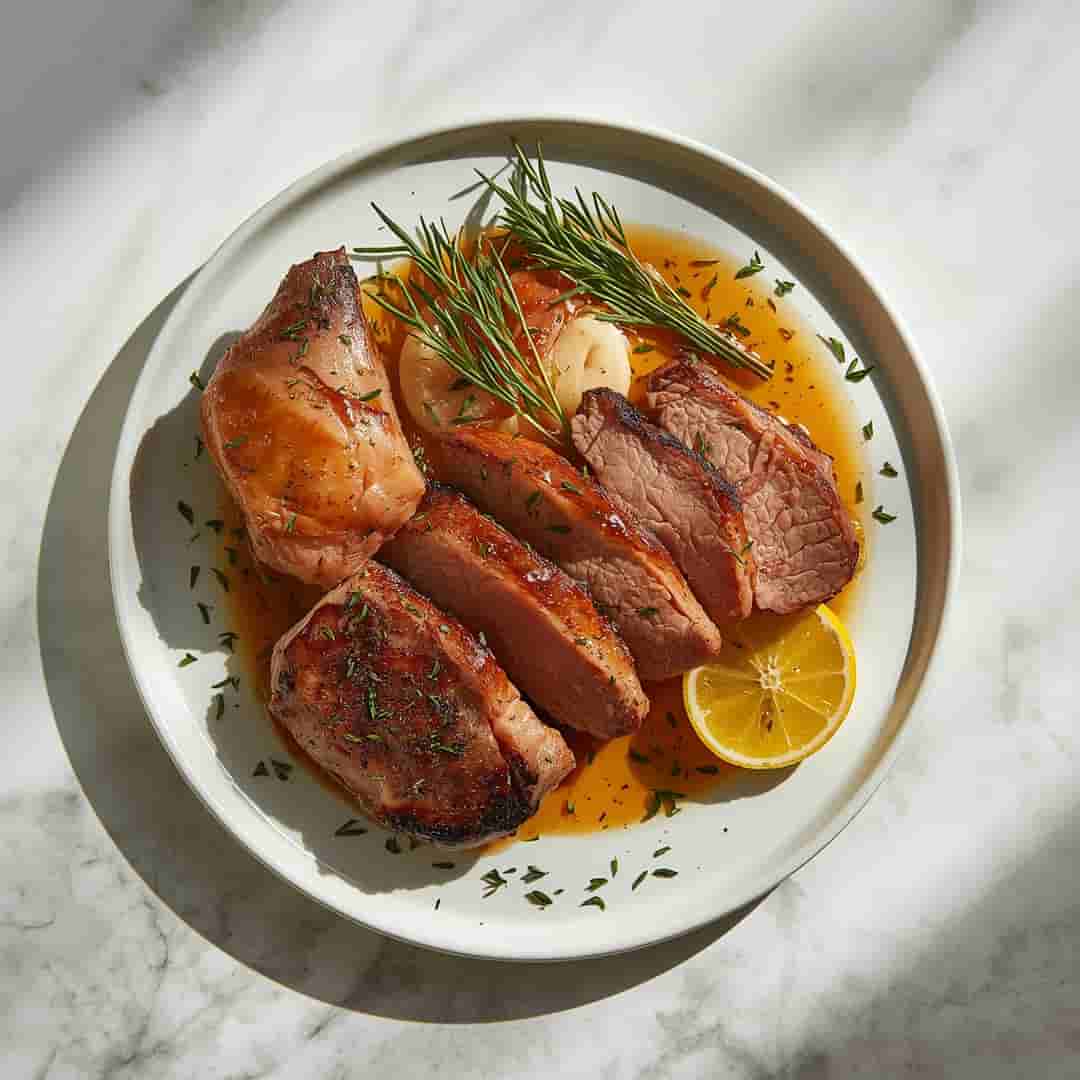
Garlic Herb Prime Rib
Ingredients
Equipment
Method
- Remove the prime rib roast from the refrigerator at least 1-2 hours before cooking to allow it to come to room temperature. This ensures more even cooking. Pat the roast dry thoroughly with paper towels; a dry surface promotes a better crust.
- In a small bowl, combine the minced garlic, chopped rosemary, thyme, sage (if using), coarse sea salt, freshly ground black pepper, and olive oil. Mix well until a thick paste forms.
- Generously rub the herb paste all over the entire surface of the prime rib roast. Make sure to get into all the crevices. For best results, you can do this step the night before and let the roast marinate in the refrigerator, covered. If marinating overnight, bring it to room temperature for 1-2 hours before roasting.
- Preheat your oven to a high temperature, 450°F (230°C). Place an oven-safe roasting rack in a shallow roasting pan.
- For an extra crispy crust, you can sear the roast on all sides in a large, oven-safe skillet over high heat with 1-2 tablespoons of oil before transferring to the roasting pan. This step takes about 2-3 minutes per side.
- Place the seasoned prime rib fat-side up on the roasting rack in the preheated 450°F (230°C) oven for 15-20 minutes. This initial high heat creates a beautiful crust.
- After the initial high-heat roast, reduce the oven temperature to 325°F (160°C). Continue to roast until an internal thermometer inserted into the thickest part of the roast, away from the bone, reaches your desired doneness: Rare: 120-125°F (49-52°C) Medium-Rare: 125-130°F (52-54°C) Medium: 130-135°F (54-57°C) *Remember, the temperature will rise by 5-10°F during resting.* A 4-5 pound boneless prime rib typically takes 1.5 to 2.5 hours at 325°F (160°C) after the initial sear.
- This is crucial! Once the desired internal temperature is reached, remove the prime rib from the oven, transfer it to a cutting board, and tent loosely with aluminum foil. Let it rest for at least 20-30 minutes before carving. Resting allows the juices to redistribute, resulting in a more tender and flavorful roast.
- While the roast rests, you can make a simple pan sauce. Carefully pour off any excess fat from the roasting pan, leaving behind the flavorful drippings. Place the pan on the stovetop over medium heat. Deglaze the pan with 1/2 cup beef broth or red wine, scraping up any browned bits from the bottom. Simmer for a few minutes until slightly reduced. Season to taste.
- Carve the prime rib against the grain into thick slices. Serve immediately with the pan drippings, if desired.