
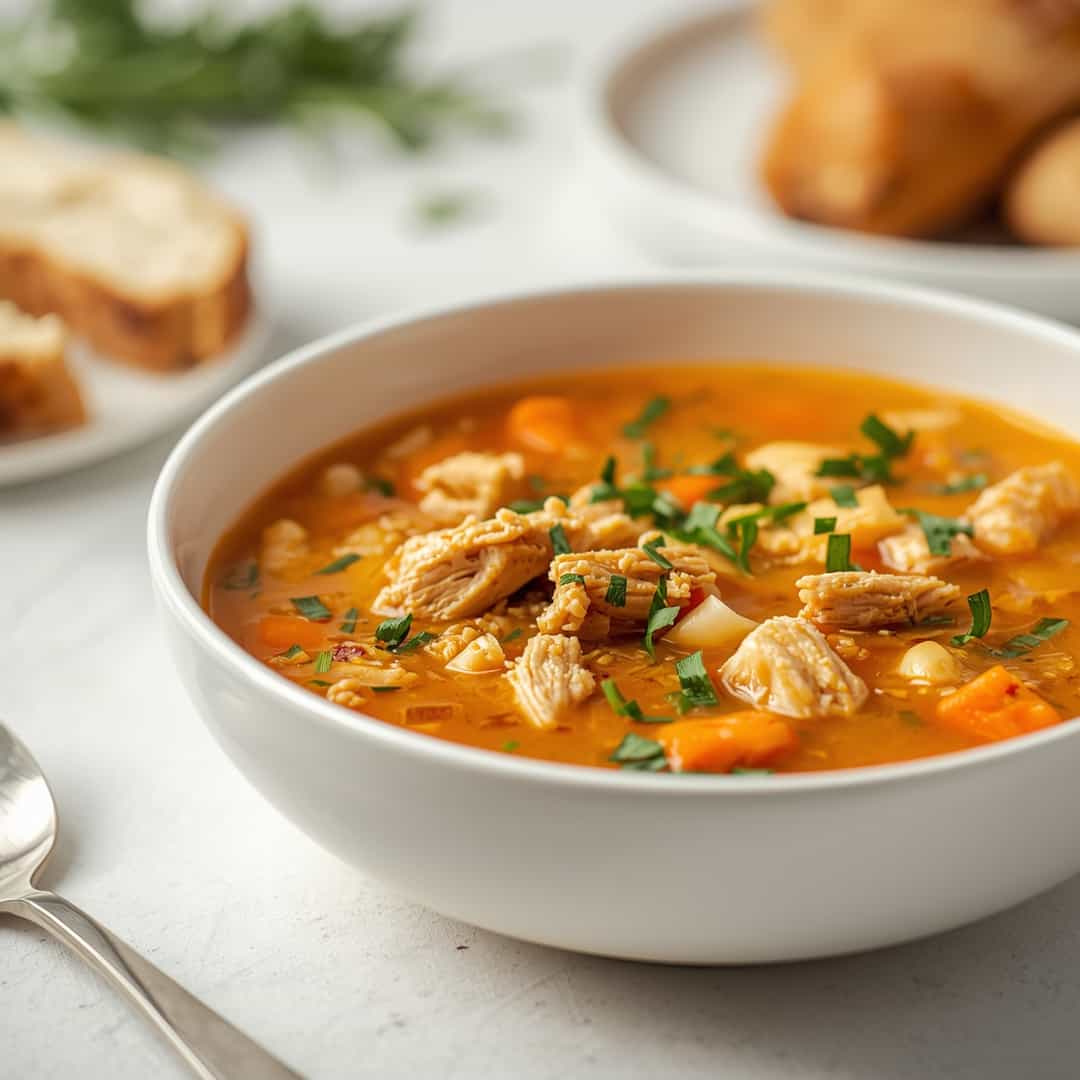
Homemade Chicken Soup for Canning is your ultimate guide to preserving the comforting classic, perfect for busy kitchens and unexpected cravings. This straightforward recipe ensures you have delicious, nourishing soup ready to enjoy straight from your pantry, making meal prep a breeze no matter the season.
Key Ingredients for Homemade Chicken Soup for Canning
- 2.5 kg whole chickens or chicken pieces (bone-in for richer broth)
- 4 liters cold water
- 2 large onions, quartered
- 4 carrots, peeled and roughly chopped
- 4 celery stalks, roughly chopped
- 4 cloves garlic, smashed
- 2 bay leaves
- 1 teaspoon dried thyme
- 1 teaspoon dried rosemary
- Salt to taste (start with 1 tablespoon)
- Black peppercorns (1 teaspoon)
How to Make Homemade Chicken Soup for Canning
This Homemade Chicken Soup for Canning recipe is designed for ultimate ease and satisfaction, delivering a deeply flavorful and hearty soup with minimal fuss. Enjoy the simple process of creating a pantry staple that’s both nourishing and incredibly convenient. The entire preparation, from cooking the chicken to having it ready for canning, takes approximately 2-3 hours, making it a manageable weekend project.
Step-by-Step Instructions
- Prepare the Chicken: Rinse the whole chickens or chicken pieces under cold water. Place them in a large stockpot.
- Add Aromatics and Water: Add the quartered onions, roughly chopped carrots, roughly chopped celery, smashed garlic cloves, bay leaves, dried thyme, dried rosemary, and black peppercorns to the pot with the chicken. Pour in the 4 liters of cold water, ensuring the chicken is mostly submerged.
- Season the Broth: Add 1 tablespoon of salt to the pot. You can adjust this later after the broth has simmered and you’ve strained it.
- Bring to a Boil: Place the stockpot over high heat and bring the contents to a rolling boil.
- Skim and Simmer: Once boiling, reduce the heat to low, cover partially, and let it simmer for at least 1.5 to 2 hours, or until the chicken is thoroughly cooked and falls easily from the bone. During the simmering process, regularly skim off any foam or impurities that rise to the surface to ensure a clear broth.
- Remove Chicken and Vegetables: Carefully remove the cooked chicken from the pot and set it aside to cool slightly. Strain the broth through a fine-mesh sieve lined with cheesecloth (if you have it) into a clean pot or large bowl. Discard the cooked vegetables and aromatics.
- Shred the Chicken: Once the chicken is cool enough to handle, remove the skin and bones and shred or dice the meat. You’ll want about 4-5 cups of shredded chicken for this batch of soup.
- Prepare Canning Jars and Lids: Wash and sterilize your canning jars, lids, and rings according to your canner’s instructions. For pressure canning, you’ll typically need pint or quart-sized jars.
- Assemble Soup for Canning: Ladle the hot broth back into the clean stockpot. Add the shredded chicken, and any additional vegetables you desire for your canned soup (like chopped carrots, celery, peas, or corn – ensure these are pre-cooked or added raw depending on canning recommendations, raw is often preferred for texture). You can also add a pinch more salt or pepper if needed, but it’s best to season lightly before serving.
- Fill Jars: Ladle the hot soup into the sterilized jars, leaving a 1-inch headspace from the rim of the jar to the soup.
- Remove Air Bubbles: Use a non-metallic utensil (like a plastic spatula or chopstick) to run around the inside of the jars, releasing any trapped air bubbles.
- Wipe Rims and Secure Lids: Wipe the rims of the jars clean with a damp cloth to ensure a good seal. Place the sterilized lids on the jars and screw on the bands fingertip-tight.
- Pressure Can: Process the jars in a pressure canner according to the manufacturer’s instructions and specified timings for chicken soup. This is crucial for safety and shelf stability. For example, pint jars typically require 75 minutes at 10 lbs pressure (adjusted for altitude), and quart jars require 90 minutes at 10 lbs pressure (adjusted for altitude). Always consult up-to-date canning guidelines from reputable sources like the National Center for Home Food Preservation.
- Cool and Check Seals: Once the processing time is complete, turn off the heat and let the pressure drop naturally. Carefully remove the jars from the canner and let them cool undisturbed on a towel-lined counter for 12-24 hours. Check that the lids have sealed by pressing down on the center – it should not flex.
Why You’ll Love This Homemade Chicken Soup for Canning
You’ll adore this Homemade Chicken Soup for Canning for its unparalleled heartiness and the incredible convenience it offers. The rich, homemade broth, packed with tender shredded chicken and tender vegetables, is deeply satisfying and tastes just like it came fresh from the stove. This recipe offers a substantial cost-saving benefit compared to purchasing pre-made canned soups, allowing you to stock your pantry with delicious, wholesome meals for a fraction of the price. Unlike store-bought alternatives that can sometimes taste bland or overly processed, this version bursts with authentic, home-cooked flavor, making every spoonful a comforting delight.
Imagine the sheer joy of opening a jar of this nourishing soup on a chilly evening or when you’re feeling under the weather, knowing you created it yourself. It’s an investment in future quick and healthy meals, saving you precious time and effort on busy days. So, gather your ingredients, follow these simple steps, and transform your kitchen into a home-canning haven. Give this Homemade Chicken Soup for Canning a try – your future self will thank you!
Storing and Reheating Tips
Properly stored, your Homemade Chicken Soup for Canning will remain delicious and safe to eat for an extended period.
Storage:
- Shelf-Stable: Once correctly pressure canned and sealed, the jars of chicken soup are shelf-stable and can be stored in a cool, dark, and dry place (like a pantry or cellar) for up to 12-18 months for optimal quality. Ensure jars are not subject to drastic temperature changes or direct sunlight.
- Refrigeration: If you choose not to can or have opened a jar, store leftovers in airtight containers in the refrigerator for up to 3-4 days.
- Freezing (Uncanned or Opened Jars): If you have cooked soup that you haven’t canned, or if a jar has been opened, freezing is an excellent option. Ladle the cooled soup into freezer-safe containers or heavy-duty freezer bags, leaving about an inch of headspace for expansion. Frozen soup will maintain its quality for up to 3-6 months. Label containers with the date and contents.
Reheating:
- From Canned Jars: Open the sealed jar and pour the soup into a saucepan. Reheat gently over medium-low heat, stirring occasionally, until heated through. Avoid boiling vigorously, as this can alter the texture.
- From Refrigerator: Pour the refrigerated soup into a saucepan and heat gently over medium-low heat until hot. Alternatively, you can reheat it in the microwave in a microwave-safe bowl, stirring halfway through.
- From Freezer: Thaw frozen soup overnight in the refrigerator before reheating using the methods described above. If you need to reheat directly from frozen, do so very gently in a saucepan over low heat, stirring frequently, ensuring it heats through evenly.
Final Thoughts
This Homemade Chicken Soup for Canning recipe is a true pantry essential, offering unparalleled comfort and convenience. Embrace the rewarding process of canning and savor the delicious, nourishing soup you’ve created for months to come. Give it a try and enjoy the peace of mind that comes with having healthy, homemade goodness at your fingertips.
Homemade Chicken Soup for Canning
Ingredients
Equipment
Method
- Rinse the whole chickens or chicken pieces under cold water. Place them in a large stockpot.2.5 kg whole chickens or chicken pieces
- Add the quartered onions, roughly chopped carrots, roughly chopped celery, smashed garlic cloves, bay leaves, dried thyme, dried rosemary, and black peppercorns to the pot with the chicken. Pour in the 4 liters of cold water, ensuring the chicken is mostly submerged.4 liters cold water, 2 large onions, 4 carrots, 4 celery stalks, 4 cloves garlic, 2 bay leaves, 1 teaspoon dried thyme, 1 teaspoon dried rosemary, 1 teaspoon black peppercorns
- Add 1 tablespoon of salt to the pot. You can adjust this later after the broth has simmered and you’ve strained it.1 tablespoon salt
- Place the stockpot over high heat and bring the contents to a rolling boil.
- Once boiling, reduce the heat to low, cover partially, and let it simmer for at least 1.5 to 2 hours, or until the chicken is thoroughly cooked and falls easily from the bone. During the simmering process, regularly skim off any foam or impurities that rise to the surface to ensure a clear broth.
- Carefully remove the cooked chicken from the pot and set it aside to cool slightly. Strain the broth through a fine-mesh sieve lined with cheesecloth (if you have it) into a clean pot or large bowl. Discard the cooked vegetables and aromatics.
- Once the chicken is cool enough to handle, remove the skin and bones and shred or dice the meat. You’ll want about 4-5 cups of shredded chicken for this batch of soup.
- Wash and sterilize your canning jars, lids, and rings according to your canner’s instructions. For pressure canning, you’ll typically need pint or quart-sized jars.
- Ladle the hot broth back into the clean stockpot. Add the shredded chicken, and any additional vegetables you desire for your canned soup (like chopped carrots, celery, peas, or corn – ensure these are pre-cooked or added raw depending on canning recommendations, raw is often preferred for texture). You can also add a pinch more salt or pepper if needed, but it’s best to season lightly before serving.
- Ladle the hot soup into the sterilized jars, leaving a 1-inch headspace from the rim of the jar to the soup.
- Use a non-metallic utensil (like a plastic spatula or chopstick) to run around the inside of the jars, releasing any trapped air bubbles.
- Wipe the rims of the jars clean with a damp cloth to ensure a good seal. Place the sterilized lids on the jars and screw on the bands fingertip-tight.
- Process the jars in a pressure canner according to the manufacturer’s instructions and specified timings for chicken soup. This is crucial for safety and shelf stability. For example, pint jars typically require 75 minutes at 10 lbs pressure (adjusted for altitude), and quart jars require 90 minutes at 10 lbs pressure (adjusted for altitude). Always consult up-to-date canning guidelines from reputable sources like the National Center for Home Food Preservation.
- Once the processing time is complete, turn off the heat and let the pressure drop naturally. Carefully remove the jars from the canner and let them cool undisturbed on a towel-lined counter for 12-24 hours. Check that the lids have sealed by pressing down on the center – it should not flex.