
Freezing rhubarb is a fantastic way to preserve its tart flavor and vibrant color for use year-round. This simple process ensures you can enjoy your homegrown or farmers’ market bounty in pies, crumbles, and sauces long after the growing season has ended. Learn the best method for preserving this versatile fruit.
Why You Will Love This Recipe
You’ll love knowing how to freeze rhubarb because it’s incredibly easy and preserves the fresh taste of your rhubarb for future culinary adventures. This method requires minimal effort and prevents waste, making it a sustainable choice for any kitchen. Plus, having perfectly prepped rhubarb on hand means spontaneous baking projects are always an option!
Ingredients
- Fresh rhubarb stalks
Step-by-Step Instructions
- Begin by washing your rhubarb stalks thoroughly under cool running water. Gently scrub away any dirt or debris.
- Trim the ends of the rhubarb stalks. Discard any bruised or damaged parts.
- Cut the rhubarb into desired lengths. For most recipes, 1-inch pieces are ideal.
- Spread the cut rhubarb in a single layer on a baking sheet lined with parchment paper. This prevents the pieces from clumping together once frozen.
- Place the baking sheet in the freezer for 1 to 2 hours, or until the rhubarb pieces are firm and frozen solid.
- Once frozen, transfer the rhubarb pieces into freezer-safe bags or airtight containers.
- Label the bags or containers with the date and “frozen rhubarb.”
- Return the sealed bags or containers to the freezer for long-term storage.
Expert Tips / Pro Tips
To ensure the best results when freezing rhubarb, consider these professional tips. Always start with fresh rhubarb for the best flavor and texture. If your rhubarb is a bit sandy, a quick soak in cool water before trimming can help dislodge any grit. For easier portioning later, consider freezing smaller batches of rhubarb. Alternatively, you can blanch the rhubarb for 30-60 seconds and then shock it in ice water before freezing, which can help preserve its color and texture, though it’s an optional step.
Variations & Substitutions
While this guide focuses on preserving plain rhubarb, you can lightly sweeten it before freezing if your intended use is primarily for desserts where added sugar is desired. Toss the cut rhubarb with a tablespoon or two of sugar per pound before spreading it on the baking sheet. This is a great shortcut for pies and crumbles. For a flavor boost, you could also add a sprinkle of cinnamon or a touch of lemon zest to the rhubarb before freezing.
Serving Suggestions
Frozen rhubarb can be used in almost any recipe that calls for fresh rhubarb. It’s perfect for baking pies, crumbles, crisps, muffins, scones, and quick breads. Thaw the rhubarb slightly or use it directly from frozen in cooked applications like jams, sauces, compotes, and syrups. Its tartness complements sweet ingredients beautifully.
Storage, Freezing & Reheating
Properly frozen rhubarb can last for up to 9-12 months in a standard freezer. For optimal freshness, ensure it is stored in airtight containers or heavy-duty freezer bags to prevent freezer burn. When ready to use, you can typically use the frozen rhubarb directly in most cooked recipes. If a recipe requires thawed rhubarb, drain off any excess liquid after thawing in the refrigerator or at room temperature. Reheating is not applicable to raw frozen rhubarb; rather, it refers to reheating dishes prepared with frozen rhubarb, which should be done according to the specific recipe’s instructions.
Nutrition Information
| Calories | 21 |
| Carbohydrates | 4.5 g |
| Fiber | 1.8 g |
| Sugar | 1.1 g |
| Protein | 0.9 g |
| Fat | 0.2 g |
| Vitamin C | 8 mg |
| Vitamin A | 163 IU |
Note: Nutritional information is an estimate based on raw rhubarb per 100g and can vary.
FAQ
Do I need to blanch rhubarb before freezing?
Blanching rhubarb before freezing is optional but can help preserve its color and texture for longer storage. To blanch, immerse the cut rhubarb in boiling water for 30-60 seconds, then immediately plunge it into ice water to stop the cooking process. After draining and patting dry, proceed with freezing as usual.
Can I freeze rhubarb without cutting it first?
Yes, you can freeze rhubarb without cutting it first, but it will take up more space in your freezer and may be less convenient for portioning later. If you choose to freeze whole stalks, ensure they are clean and dry before placing them in freezer bags.
What is the best way to store frozen rhubarb?
The best way to store frozen rhubarb is in airtight, freezer-safe bags or containers. Removing as much air as possible from bags will help prevent freezer burn and maintain the quality of the rhubarb.
How long does frozen rhubarb last?
When properly stored, frozen rhubarb can last for up to 9 to 12 months in a standard freezer. After this period, it may still be safe to eat, but its quality, flavor, and texture might degrade.
Can I use frozen rhubarb in place of fresh rhubarb?
Yes, you can generally use frozen rhubarb in place of fresh rhubarb in most recipes, especially cooked ones like pies, crumbles, sauces, and jams. You may want to use it directly from frozen or thaw and drain it first, depending on the recipe’s moisture requirements.
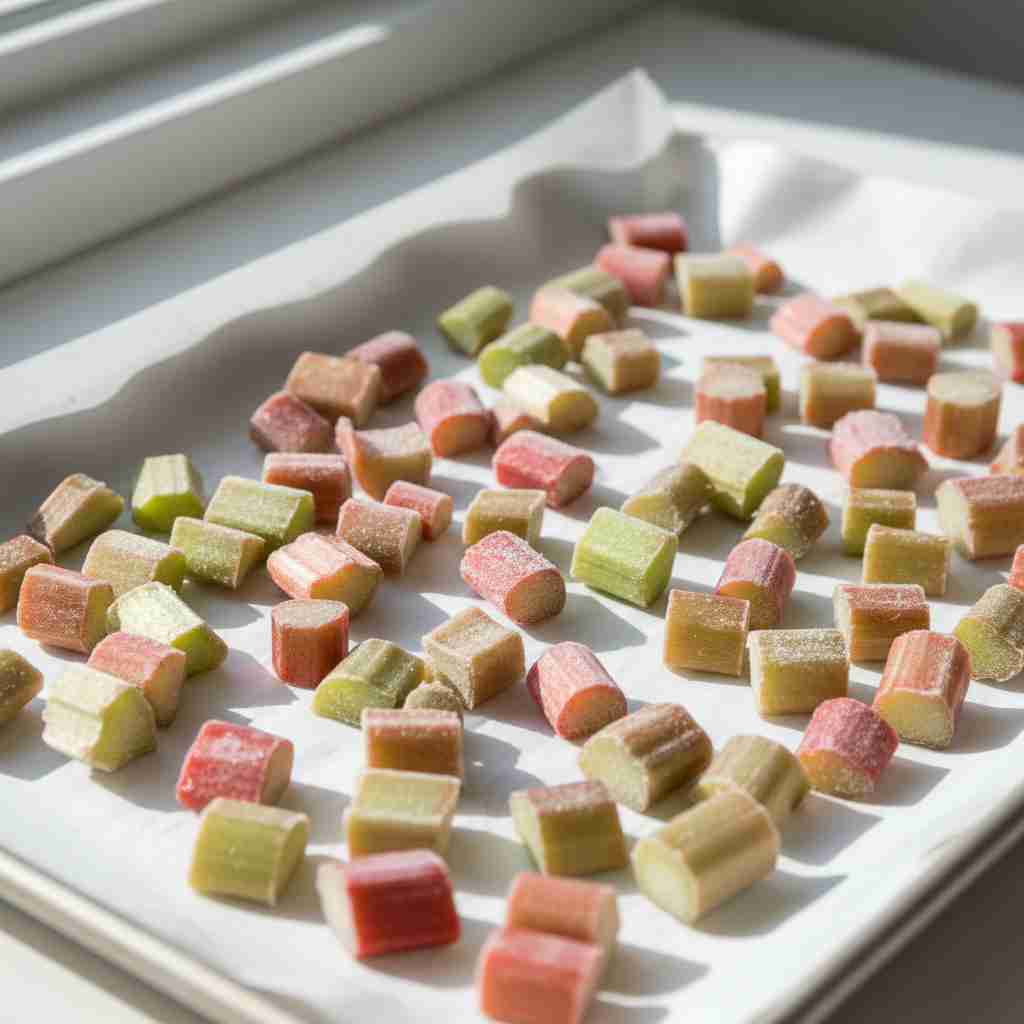
How to Freeze Rhubarb
Ingredients
Method
- Wash the rhubarb stalks thoroughly under cold running water.
- Trim off the leaves and any tough, woody ends from the stalks. Discard the leaves as they are poisonous.
- Cut the rhubarb stalks into desired portions. For most recipes like pies or crumbles, 1-inch (2.5 cm) pieces are ideal. For jams or sauces, you might prefer smaller pieces.
- Blanching (optional but recommended for better quality): Bring a large pot of water to a rolling boil. Prepare a bowl of ice water. Blanch the chopped rhubarb for 1-2 minutes. Drain immediately and plunge into the ice water to stop the cooking process. This helps to preserve color and texture.
- Dry the rhubarb thoroughly. Pat it well with clean kitchen towels or paper towels to remove as much surface moisture as possible. This is crucial to prevent ice crystals from forming and making the rhubarb mushy.
- Portion the rhubarb into freezer bags or airtight containers. Leave about 1/2 inch (1 cm) headspace at the top if using containers. If using bags, press out as much air as possible before sealing.
- Label the bags or containers with the date and contents. Freeze for up to 12 months.