
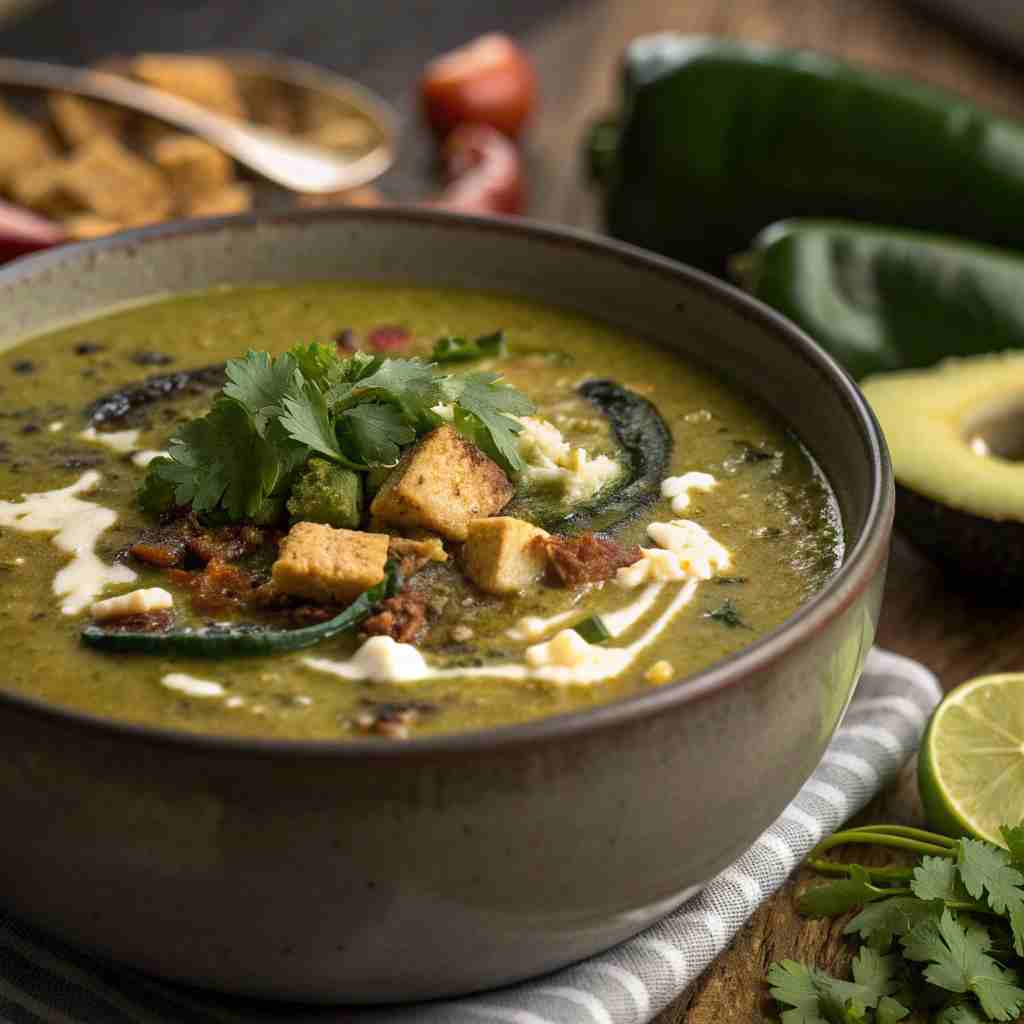
Ever wondered how to capture the smoky essence of Mexican cuisine in a warm, comforting bowl? Roasted Poblano Soup is your answer – a velvety, flavor-packed creation that transforms humble peppers into a celebration of authentic flavors. This Roasted Poblano Soup balances the gentle heat of charred peppers with creamy texture, creating a restaurant-quality dish right in your own kitchen. Whether you’re looking to warm up on a chilly evening or impress guests with your culinary prowess, this Roasted Poblano Soup delivers unforgettable flavor in every spoonful.
Ingredients List
- 6 large poblano peppers
- 2 tablespoons olive oil
- 1 large white onion, diced
- 4 garlic cloves, minced
- 1 teaspoon ground cumin
- ½ teaspoon oregano (preferably Mexican)
- 4 cups vegetable or chicken broth
- 1 cup heavy cream (or substitute coconut cream for dairy-free option)
- ¼ cup chopped cilantro, plus extra for garnish
- 1 tablespoon lime juice
- Salt and freshly ground black pepper to taste
- Optional toppings: Mexican crema, crispy tortilla strips, diced avocado, crumbled queso fresco
Timing
- Prep Time: 15 minutes (includes pepper roasting)
- Cooking Time: 30 minutes
- Total Time: 45 minutes
This Roasted Poblano Soup saves you nearly 30 minutes compared to traditional Mexican soup recipes that require long simmering times, making it perfect for weeknight dinners without sacrificing authentic flavor.
Step 1: Roast the Poblanos
Place poblano peppers under a broiler or over an open flame, rotating until skin is charred and blistered on all sides (about 5-7 minutes). Transfer to a bowl, cover with plastic wrap, and let steam for 10 minutes. Peel off the charred skin, remove seeds and stems, then roughly chop. For best results, don’t rinse the peppers – a bit of char adds incredible depth of flavor!
Step 2: Sauté the Base
Heat olive oil in a large pot over medium heat. Add diced onion and sauté until translucent (about 5 minutes). Add minced garlic, cumin, and oregano, cooking until fragrant (about 30 seconds). Stirring continuously prevents garlic from burning and ensures even flavor distribution.
Step 3: Blend to Perfection
Add the chopped roasted poblanos and broth to the pot. Bring to a simmer and cook for 10 minutes to meld flavors. Using an immersion blender (or carefully transferring to a regular blender in batches), purée until smooth. If using a regular blender, remember to vent the lid slightly to prevent pressure buildup.
Step 4: Finish the Soup
Return the puréed soup to the pot if needed. Stir in the heavy cream, cilantro, and lime juice. Heat gently without boiling. Season with salt and pepper to taste. For a soup that pairs beautifully with this Roasted Poblano Soup, check out these Creamy Savory Mashed Sweet Potatoes for a complete meal.
Nutritional Information
Per serving (approximately 1½ cups):
- Calories: 210
- Protein: 3g
- Carbohydrates: 9g
- Fat: 18g
- Fiber: 2g
- Vitamin C: 80% daily value
- Vitamin A: 15% daily value
Healthier Alternatives for the Recipe
For a lighter version, replace heavy cream with half-and-half or evaporated milk. Vegetarians can use vegetable broth and vegans can substitute coconut cream for dairy cream. For keto or low-carb diets, this soup is naturally compatible – just skip any tortilla garnishes. Gluten-free diners can enjoy this recipe as written, as it contains no gluten ingredients.
Serving Suggestions
Serve this Roasted Poblano Soup in pre-warmed bowls topped with a swirl of Mexican crema, crispy tortilla strips, diced avocado, and a sprinkle of crumbled queso fresco. For a dinner party presentation, serve in small cups as an elegant starter. Pairs wonderfully with a crisp Sauvignon Blanc or a light Mexican lager. Find more presentation inspiration on our Pinterest board.
Common Mistakes to Avoid
- Not charring poblanos thoroughly: Proper charring develops the signature smoky flavor
- Boiling after adding cream: This can cause curdling; gentle heating is key
- Under-seasoning: Taste and adjust salt levels after blending
- Skipping the resting time after roasting: The steaming step makes pepper skins easier to remove
Storing Tips for the Recipe
This Roasted Poblano Soup keeps well in the refrigerator for up to 4 days in an airtight container. For freezing, store without the cream for up to 3 months, then add cream after reheating. When reheating, use low heat and stir frequently to prevent separation. Perfect for meal prep – double the recipe and portion into individual containers for quick lunches.
Conclusion
This Roasted Poblano Soup captures the essence of Mexican cuisine in a deceptively simple recipe. The balance of smoky peppers, fresh herbs, and creamy texture creates a memorable dish that works as a starter or main course. Whether you’re entertaining guests or treating yourself to a special meal, this soup delivers restaurant-quality flavor with home kitchen simplicity. Try it this week and share your results in the comments!
FAQs
How spicy is this Roasted Poblano Soup?
Poblanos are mild-to-medium heat peppers, making this soup flavorful rather than overly spicy. For more heat, add a jalapeño when roasting the poblanos, or for less heat, remove all pepper membranes.
Can I make this soup ahead for a dinner party?
Absolutely! Make the base a day ahead, then reheat gently and add cream just before serving for the freshest flavor and texture.
Is there a way to make this soup without a blender?
Yes – use a food processor or food mill, though the texture won’t be quite as smooth. In a pinch, you can also mash the softened vegetables with a potato masher for a more rustic version.
How can I tell when poblano peppers are perfectly roasted?
The skin should be blistered and blackened in spots all around the pepper, and the pepper itself should be softened but not burnt through. This usually takes 5-7 minutes under a broiler with occasional turning.
Can I use canned poblano peppers instead of fresh?
While fresh is strongly recommended for the best flavor, in a pinch you can use canned green chiles, though the soup will have less depth of flavor and a milder profile.