
The Best Homemade Apricot Jam Recipe for Summer Flavor
Nothing tastes more like summer sunshine than a jar of homemade Apricot Jam Recipe. This classic preserve captures the sweet-tart essence of fresh apricots, making it perfect for brightening up your breakfast routine. Follow this simple guide to create a silky, vibrant jam that your family will request all year long.
Why You Will Love This Recipe
This Apricot Jam Recipe is incredibly straightforward, requiring only three core ingredients. It yields a naturally vibrant color and a perfect set without relying on commercial pectin, letting the true flavor of the apricots shine through. Homemade jam tastes infinitely better than store-bought, and sharing a jar of your own creation is deeply rewarding. Plus, mastering this recipe opens the door to preserving other seasonal fruits!
Ingredients
- 1 pound fresh apricots, halved and pitted
- 3/4 cup granulated sugar (adjust based on apricot sweetness)
- 1 tablespoon lemon juice (freshly squeezed is best)
Step-by-Step Instructions
- Prepare the Fruit: Wash the apricots thoroughly. Halve them and remove the pits. If the apricots are very large, you can roughly chop the halves.
- Macerate (Optional but Recommended): In a large, non-reactive pot or Dutch oven, combine the prepared apricots and granulated sugar. Stir gently. Cover the pot and let this mixture sit at room temperature for at least 2 hours, or ideally overnight in the refrigerator. This draws out the fruit juices, leading to a better final texture and reducing cooking time.
- Start Cooking: Place the pot over medium-high heat. Add the lemon juice. Stir occasionally until the sugar has completely dissolved.
- Boil and Skim: Bring the mixture to a full, rolling boil that cannot be stirred down. Skim off any foam or scum that rises to the surface using a metal spoon; this helps ensure a clearer jam.
- Cook to Setting Point: Continue boiling the jam vigorously, stirring frequently to prevent scorching on the bottom. The jam is ready when it reaches 220 degrees F (104 degrees C) on a candy thermometer, or when it thinly coats the back of a cold spoon (the sheet test). This process usually takes 15 to 25 minutes after reaching a full boil, depending on the water content of the fruit.
- Jarring: Remove the pot from the heat. Carefully ladle the hot jam into sterilized canning jars, leaving 1/4 inch of headspace. Wipe the rims clean with a damp cloth.
- Process (Optional but Recommended for Shelf Stability): Secure the lids and bands finger-tight. Process the jars in a boiling water bath canner for 10 minutes (adjusting time for altitude). If not canning, allow the jars to cool completely on the counter, then refrigerate.
Expert Tips / Pro Tips
- Test for Pectin: Apricots are naturally high in pectin, but the lemon juice is crucial as it helps the setting process. If your apricots seem very under-ripe, a commercial pectin boost might be needed, but try without first!
- Use a Wide Pot: A wide-bottomed pot allows the moisture to evaporate quickly, which means the jam cooks faster and results in a brighter flavor. Do not fill the pot more than halfway, as the jam will bubble up significantly.
- The Freezer Test: For easy testing without a thermometer, place a small plate in the freezer while you cook. When you think the jam is ready, drop a teaspoon of jam onto the cold plate, let it sit for 30 seconds, then push it with your finger. If it wrinkles, it’s set. If it’s still runny, cook for a few more minutes and retest.
Variations & Substitutions
- Spiced Apricot Jam: Add 1/2 teaspoon of ground cinnamon or a few whole star anise pods during the last 10 minutes of cooking. Remove spices before jarring.
- Vanilla Infusion: Add one scraped vanilla bean pod to the pot during the last 10 minutes of cooking for a smooth, aromatic undertone.
- Sugar Reduction: While sugar is necessary for preservation and setting, you can try reducing it to 1/2 cup per pound of fruit, but you must use commercial pectin if you reduce the sugar below 2/3 cup per pound.
Serving Suggestions
This versatile Apricot Jam Recipe is fantastic spread thickly on warm scones, croissants, or buttered toast. It makes an excellent glaze for baked ham or pork tenderloin, providing a lovely sweet counterpoint to savory flavors. Furthermore, use it as a layer in thumbprint cookies, filling for sponge cakes, or swirl it into plain Greek yogurt.
Storage, Freezing & Reheating
Shelf Stability: Properly processed and sealed jars of this jam are shelf-stable and can be stored in a cool, dark pantry for up to one year. Always check the seal before consuming; if the lid is popped up or broken, discard the contents or transfer them to the refrigerator immediately and use within three weeks. Refrigerated, open jars will last 3 to 4 weeks. For longer storage, transfer cooled jam into freezer-safe containers, leaving 1/2-inch headspace, and freeze for up to 6 months.
Nutrition Information
Note: Nutritional values are estimates and can vary based on exact ingredient amounts, especially added sugar.
| Nutrient | Approximate Value (per 1 Tbsp serving) |
|---|---|
| Calories | 55 kcal |
| Total Fat | 0 g |
| Sugar | 14 g |
| Carbohydrates | 14 g |
| Vitamin A | High |
FAQ
Why is my jam runny and hasn’t set?
The most common reason for runny jam is not reaching the correct temperature (220 degrees F) or not boiling long enough to evaporate sufficient water. Lemon juice is also vital for activating the fruit’s natural pectin. If it fails to set after cooling, you can bring it back to a boil, add 1 tablespoon of lemon juice and 1 teaspoon of pectin powder (if needed), then re-boil to setting point.
Can I use frozen apricots for this recipe?
Yes, you can absolutely use frozen apricots. Thaw them completely before using and drain off any excess liquid that accumulates during thawing, as too much extra liquid will require a longer cooking time.
How do I sterilize my canning jars properly?
Sterilization is crucial for safe canning. Wash jars and lids thoroughly in hot, soapy water. Jars must be kept hot until filling. The safest method is to place clean jars (without the rubber seals) in a large pot of water, bring to a boil, and keep them simmering (180 degrees F) until you are ready to fill them. Once filled, the jars are sterilized further during the 10-minute boiling water bath processing step.
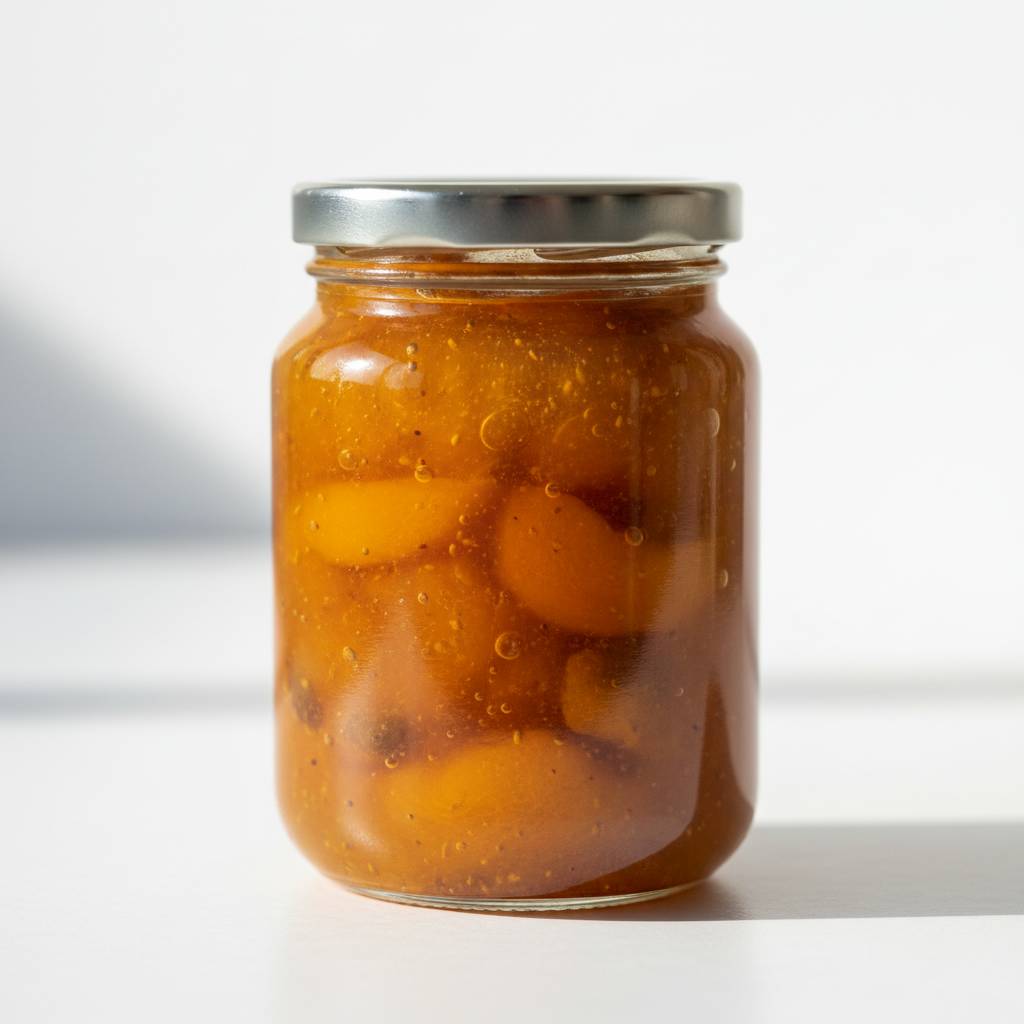
Apricot Jam Recipe
Ingredients
Method
- Prepare the fruit: Place the halved, pitted apricots in a large, heavy-bottomed pot along with the lemon juice. Stir gently to combine.
- Macerate (optional but recommended): Cover the pot and let the apricots sit at room temperature for 3 to 4 hours, or overnight in the refrigerator. This draws out the juices.
- Cook to boiling: Place the pot over medium-high heat and bring the mixture to a full, rolling boil, stirring frequently to prevent scorching. Cook for about 10 minutes until the fruit softens significantly.
- Add sugar and pectin: Thoroughly mix the granulated sugar and pectin (if using) in a small bowl before adding it to the boiling fruit mixture. Stir constantly until the sugar is completely dissolved.
- Boil rapidly to setting point: Increase the heat and continue to boil rapidly, stirring often, until the jam reaches the setting point (220°F or 104°C on a candy thermometer), or when a small dollop wrinkles when chilled.
- Skim and jar: Remove the pot from the heat. Skim off any pink foam that has risen to the surface using a slotted spoon. Ladle the hot jam into sterilized jars, leaving 1/4 inch headspace. Wipe rims clean and seal with lids.