
The Best Greek Salad Recipe: Authentic Flavor Made Easy
Discover how to make the truly authentic and absolutely delicious Best Greek Salad Recipe right in your own kitchen. This vibrant salad balances fresh vegetables with a tangy, homemade dressing that transports you straight to the Mediterranean coast. Forget bland store-bought versions; this is the real deal you’ve been searching for.
Why You Will Love This Recipe
This Best Greek Salad Recipe is celebrated globally for its simplicity and incredibly robust flavor profile. It requires absolutely no cooking, making it the perfect quick lunch or easy side dish on a hot day. The key lies in the quality of the ingredients—ripe tomatoes, crisp cucumbers, briny olives, and that unforgettable oregano-infused dressing. It’s naturally gluten-free and vegetarian, appealing to almost everyone at your table, and it’s significantly healthier than heavy, mayonnaise-based salads.
Ingredients
- 3 large ripe Roma tomatoes, cut into wedges
- 1 large English cucumber, peeled and sliced or cut into thick half-moons
- 1 medium red onion, thinly sliced
- 1 green bell pepper, cored and roughly chopped
- 1 cup Kalamata olives, pitted or unpitted (your preference)
- 8 ounces good quality feta cheese, cut into large cubes or crumbled
- 1/4 cup extra virgin olive oil
- 3 tablespoons red wine vinegar
- 1 teaspoon dried Greek oregano (essential for authentic flavor)
- 1/2 teaspoon sea salt, or to taste
- 1/4 teaspoon freshly ground black pepper, or to taste
Step-by-Step Instructions
- Prepare the vegetables: In a large serving bowl, gently combine the tomato wedges, cucumber slices, thinly sliced red onion, green bell pepper, and Kalamata olives.
- Make the dressing: In a small jar or bowl, whisk together the extra virgin olive oil, red wine vinegar, dried Greek oregano, salt, and pepper until emulsified slightly. Taste and adjust the seasoning if necessary—it should be punchy.
- Dress the salad: Pour about two-thirds of the dressing over the vegetable mixture. Toss gently but thoroughly, ensuring all the vegetables are lightly coated.
- Add the feta: Arrange the large cubes or crumbles of feta cheese over the top of the vegetables. Avoid tossing the feta too vigorously, as you want the cubes to remain intact.
- Final touches: Drizzle the remaining dressing over the feta cheese. For the most traditional presentation, sprinkle an extra pinch of dried oregano directly over the feta. Serve immediately.
Expert Tips / Pro Tips
- Use High-Quality Feta: Authentic Greek salads use feta made from sheep’s or a mixture of sheep’s and goat’s milk, packed in brine. Avoid dry, pre-crumbled feta if possible, as the brine adds moisture and flavor.
- Don’t Over-Chop: Traditional Greek salad features large, rustic cuts of vegetables. This keeps them from getting soggy and gives the salad better texture.
- The Dressing Principle: In authentic preparations, the dressing is often minimal. The quality of the olive oil and vinegar is paramount. Resist the urge to drench the vegetables; they should be lightly coated.
- Marinate Separately: If you want intensely flavored onions, soak the sliced red onions in a little cold water for 10 minutes before adding them to the salad. This tames their sharp bite.
Variations & Substitutions
- Add Capers: A teaspoon or two of drained capers can add an extra layer of salty brine complexity.
- Different Peppers: While green bell pepper is classic, you can use strips of yellow or orange bell pepper for a sweeter flavor profile.
- No Vinegar: In some regional variations, lemon juice is used instead of red wine vinegar for a brighter citrus note.
- Herb Boost: Feel free to add a small handful of fresh parsley or mint, finely chopped, to the vegetable mix.
Serving Suggestions
This Best Greek Salad Recipe is robust enough to be a light meal on its own, especially when paired with a thick slice of crusty bread for soaking up the residual dressing (known as “ladomania”). It pairs wonderfully alongside grilled chicken souvlaki, lemon roasted potatoes, or simple grilled fish.
Storage, Freezing & Reheating
This salad is best enjoyed immediately after preparation. Cucumbers and tomatoes release water quickly once dressed, leading to a watery result if stored for too long. If you must prepare ahead, store the undressed vegetables, olives, and feta separately from the dressing in airtight containers in the refrigerator for up to 2 days. Dress right before serving. Freezing is not recommended due to the high water content of the fresh vegetables.
Nutrition Information
Please note that nutritional values are approximate and highly dependent on the exact brands and quantities of oil and feta used. This data is based on one estimated serving size.
| Component | Approximate Value |
|---|---|
| Calories | 250 – 300 kcal |
| Total Fat | 22g |
| Saturated Fat | 6g |
| Carbohydrates | 10g |
| Fiber | 3g |
| Protein | 8g |
FAQ
What makes a Greek salad authentic?
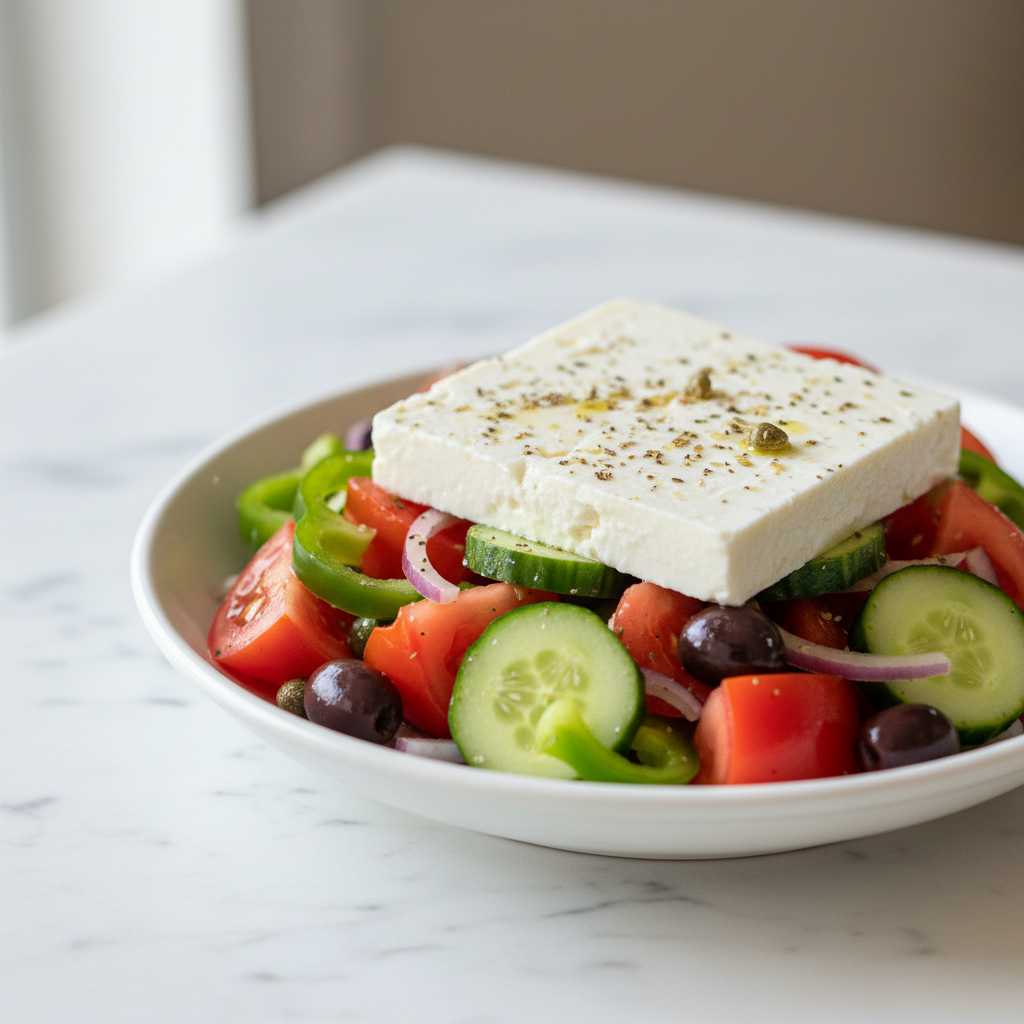
Authentic Greek salad (Horiatiki) relies on using large, rustic cuts of fresh, seasonal vegetables, high-quality olive oil, briny Kalamata olives, and a thick slab of feta cheese on top, seasoned heavily with dried Greek oregano. Crucially, it should not contain lettuce or any leafy greens.
Can I use a different type of vinegar?
Red wine vinegar is traditional because its sharpness cuts through the richness of the olive oil and feta. Balsamic vinegar is too sweet and dark, while white vinegar is too harsh. Stick to red wine vinegar for the best results resembling the Best Greek Salad Recipe.
When should I add the feta?
The feta should be placed on top of the dressed vegetables just before serving. Tossing it too early will cause it to break down completely, clouding the dressing and losing its distinct textural element.
Best Greek Salad Recipe
Ingredients
Method
- Prepare the vegetables: In a large, shallow serving bowl, arrange the sliced tomatoes, cucumbers, green bell pepper, and thinly sliced red onion. Do not toss them yet.
- Make the dressing: In a small bowl or jar, whisk together the olive oil, red wine vinegar, dried oregano, salt, and pepper until well emulsified.
- Assemble the salad: Place the feta cheese block directly on top of the arranged vegetables. Scatter the Kalamata olives around the feta and vegetables.
- Dress the salad: Drizzle the vinaigrette evenly over the entire salad, making sure to coat the vegetables and the feta. The traditional method avoids tossing to keep the vegetables crisp and the feta whole.
- Season and serve: Allow the salad to sit at room temperature for about 10 minutes before serving so the vegetables can absorb some of the dressing flavor. Serve immediately with crusty bread for dipping into the resulting juices.