
Welcome the springtime bounty with this incredible homemade Rhubarb Jelly recipe. This brilliant pink preserve captures the unique tartness of rhubarb perfectly, balanced with just the right amount of sweetness. It is wonderfully refreshing and easy to make, transforming humble stalks into countertop treasure.
Why You Will Love This Recipe
This Rhubarb Jelly is a seasonal favorite for a reason. The vibrant color alone is enough to brighten any breakfast table. Beyond its beauty, the flavor profile is spectacular—that signature tang of rhubarb shines through, making it far superior to any store-bought jam. It sets beautifully, resulting in a clear, jewel-toned spread that pairs beautifully with scones, toast, or even as a glaze for meats.
Ingredients
- 4 cups chopped rhubarb (about 1 pound unpeeled)
- 4 cups granulated sugar
- 1 packet (1.75 oz) powdered pectin
- 1/2 cup water
Step-by-Step Instructions
- Prepare the Rhubarb: Wash the rhubarb stalks thoroughly and trim off the ends. Chop the rhubarb into small, uniform pieces.
- Cook the Rhubarb: In a large, non-reactive saucepan (stainless steel is ideal), combine the chopped rhubarb and water. Bring the mixture to a boil over medium-high heat, stirring occasionally. Reduce the heat and simmer gently until the rhubarb has completely softened and broken down, about 15 to 20 minutes. Stir frequently to prevent scorching.
- Extract the Juice: Line a colander or large sieve with several layers of cheesecloth. Pour the cooked rhubarb mixture into the prepared sieve set over a large bowl. Allow the juice to drip through naturally. This can take several hours or even overnight in the refrigerator for the clearest juice. Do not squeeze the pulp, as this can make the jelly cloudy. You need 3 cups of strained juice for this recipe.
- Measure and Prepare Pectin: Measure exactly 3 cups of the strained rhubarb juice into a clean, large pot. Measure the granulated sugar into a separate bowl and set aside. Measure the powdered pectin into a small cup and set aside.
- Prepare Jars: While you cook the jelly, sterilize your canning jars, lids, and bands according to standard canning guidelines (typically boiling for 10 minutes). Keep the jars hot until ready to fill.
- Boil the Juice and Pectin: Add the powdered pectin to the 3 cups of rhubarb juice. Whisk constantly and bring the mixture to a rolling boil over high heat (a boil that cannot be stirred down).
- Add Sugar: Once at a rolling boil, quickly stir in all of the granulated sugar. Continue stirring constantly and bring the mixture back to a full rolling boil.
- Achieve Setting Point: Maintain the full rolling boil, stirring constantly to prevent scorching, for exactly 1 minute. Remove from heat immediately. Skim off any foam that forms on the surface using a metal spoon.
- Fill Jars: Carefully ladle the hot jelly mixture into the hot, sterilized jars, leaving 1/4 inch headspace at the top. Wipe the rims clean with a damp cloth. Center the lids and screw bands on until “fingertip tight.”
- Process (Optional Water Bath): For long-term shelf stability, process the filled jars in a boiling water canner for 10 minutes, adjusting for altitude if necessary. Remove the jars and let them cool undisturbed on a wire rack for 12 to 24 hours until sealed. Check seals before storing.
Expert Tips / Pro Tips
For the Clearest Rhubarb Jelly: Patience is key here. Do not rush the juice extraction step. Squeezing the pulp releases starches and fine solids from the rhubarb, leading to cloudy juice. Allowing it to drip slowly under gravity yields the best clarity.
Use a Non-Reactive Pot: Aluminum or copper pots can react with the acids in rhubarb, potentially causing discoloration or off-flavors. Always use stainless steel or enamel-coated cookware for best results.
Testing for Set: If you are not using the boiling time specified (1 minute after sugar is added), test the set by placing a small, chilled plate in the freezer before starting. Spoon a teaspoon of hot jelly onto the cold plate, return it to the freezer for 30 seconds, then push the jelly with your finger. If it wrinkles, it is set. If not, continue boiling briefly.
Variations & Substitutions
Flavor Twists: Enhance the profile by adding aromatics during the initial cooking stage. Try adding a thin strip of fresh ginger or a few sprigs of mint to the rhubarb while it simmers. Remove these before juicing.
Citrus Boost: A teaspoon of fresh lemon zest added along with the sugar can intensify the tartness and help the pectin set even better.
Pectin Type: This recipe is formulated for regular powdered pectin. If you are using low-sugar pectin, you must follow the instructions precisely on that specific package, as the sugar and boiling times will change dramatically.
Serving Suggestions
Rhubarb Jelly is incredibly versatile! Spread it thickly on warm scones or English muffins. It makes an excellent glaze for baked ham or pork tenderloin, offering a lovely sweet-and-sour counterpoint. Dollop it over vanilla ice cream or use it as a filling between cake layers for a festive dessert.
Storage, Freezing & Reheating
Sealed Jars: Properly processed and sealed Rhubarb Jelly can be stored in a cool, dark pantry for up to one year. Unopened jars should be kept away from direct heat or sunlight.
Opened Jars: Once opened, the jelly must be refrigerated and consumed within three to four weeks, similar to commercial jams.
Freezing: While canning is preferred, you can freeze any excess jelly in freezer-safe, airtight containers, leaving about 1/2 inch headspace. Frozen jelly maintains quality for up to 6 months.
Nutrition Information
Note: Nutritional data is approximate and based on standard ingredient usage. This information does not account for specific brands or processing methods. This is not a low-sugar preserve.
| Nutrient | Per Serving (1 Tbsp) |
|---|---|
| Calories | 55 kcal |
| Total Fat | 0 g |
| Sodium | 0 mg |
| Total Carbohydrate | 14 g |
| Sugars | 13 g |
| Protein | 0 g |
FAQ
Why is my rhubarb jelly not setting?
The most common reasons for failure to set include not boiling the mixture long enough after adding the sugar, incorrect measurement of pectin, or insufficient acidity (which pectin requires to gel). Ensure you maintain a full, rolling boil for the specified minute after adding sugar.
Can I use frozen rhubarb instead of fresh?
Yes, you can use frozen rhubarb. Thaw it completely before starting the process, and drain off any excess liquid that accumulates, as this liquid is not concentrated juice needed for the recipe.
Do I have to water bath can this jelly?
Canning (the water bath process) is necessary only if you intend to store the jelly at room temperature for months. If you plan to eat the jelly within a few weeks, you can store sealed jars in the refrigerator without processing.
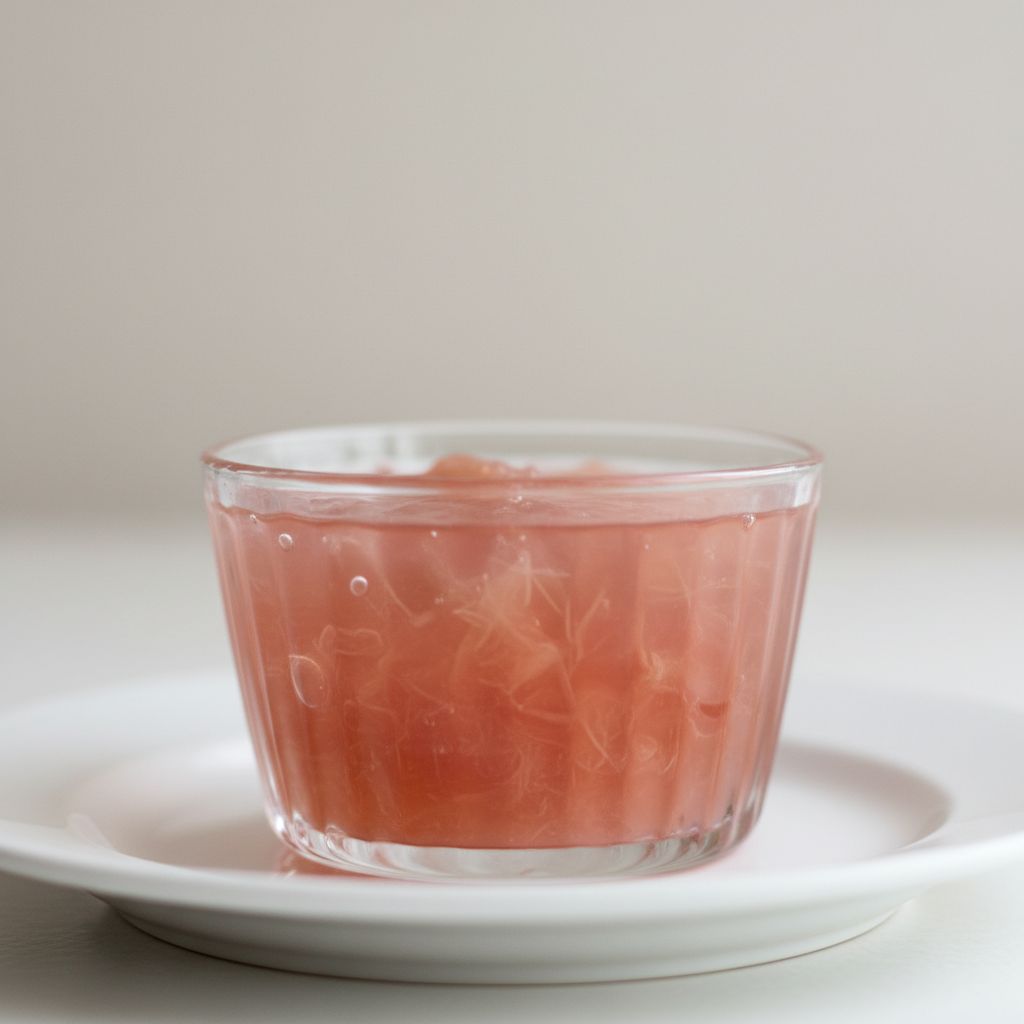
Rhubarb Jelly
Ingredients
Method
- Combine the trimmed rhubarb and water in a large, non-reactive saucepan. Bring to a boil, then reduce heat and simmer gently, covered, until the rhubarb is completely soft, about 20-25 minutes. Stir occasionally.
- Strain the cooked rhubarb mixture through a jelly bag or several layers of cheesecloth set over a bowl. Allow the juice to drip through naturally for at least 4 hours, or preferably overnight. Do not squeeze the cloth, as this will make the jelly cloudy.
- Measure exactly 4 cups of the strained rhubarb juice into a clean saucepan. Add the powdered pectin and bring the mixture to a rolling boil, stirring constantly. The boil should be rapid and unable to be stirred down.
- Quickly stir in the measured sugar. Return the mixture to a full rolling boil. Boil hard for exactly 1 minute, stirring constantly to prevent scorching.
- Remove the pan from the heat immediately. Skim off any surface foam with a spoon. Carefully ladle the hot jelly into sterilized canning jars, leaving 1/4-inch headspace.
- Wipe the rims clean, place the lids and bands on securely, and process the jars in a boiling water bath canner for 10 minutes (adjusting for altitude). Turn off heat, let rest 5 minutes, then remove jars and let cool completely on a wire rack.