
Discover the joy of preserving the season with this Simple Homemade Rhubarb Jam recipe. Fresh rhubarb, often abundant in the spring and early summer, transforms into a vibrant and flavorful spread with minimal effort. This recipe focuses on bringing out the natural tartness of the rhubarb beautifully balanced with just the right amount of sweetness.
Why You Will Love This Recipe
This is arguably the easiest way to use up that first harvest of rhubarb. You will love this recipe because it requires very few ingredients, relies on straightforward cooking techniques, and produces a gorgeous, brightly colored jam that tastes infinitely better than anything store-bought. It captures the essence of spring in a jar, making it the perfect introduction for first-time jam makers. Plus, the beautiful pink hue makes it an excellent homemade gift.
Ingredients
- 3 cups chopped fresh rhubarb (about 1 inch pieces)
- 3 cups granulated sugar
- 1/4 cup fresh lemon juice
Step-by-Step Instructions
- Prepare the Rhubarb: Thoroughly wash the fresh rhubarb stalks. Trim off the very ends and chop the stalks into small, roughly 1-inch pieces.
- Macerate (Optional but Recommended): In a large, non-reactive saucepan (stainless steel is best), combine the chopped rhubarb and granulated sugar. Stir gently to coat. Let this mixture sit at room temperature for at least 2 hours, or preferably overnight in the refrigerator. This draws out much of the rhubarb’s natural juices.
- Start Cooking: Place the saucepan over medium-high heat. Bring the mixture to a rolling boil, stirring constantly to ensure the sugar dissolves and nothing scorches on the bottom.
- Add Lemon Juice: Once a full, rolling boil is achieved (a boil that does not stop when you stir it), add the fresh lemon juice. The acid from the lemon helps set the pectin in the rhubarb, ensuring a good set.
- Boil to Setting Point: Continue to boil vigorously, stirring frequently, especially as the mixture thickens. Boil until the jam reaches the setting point. This typically takes 15 to 25 minutes from the time the full boil starts, but temperature is the best indicator.
- Test for Set: To test for the set point, place a small plate in the freezer before starting to cook. Remove the plate, drop a teaspoon of jam onto it, and return it to the freezer for one minute. Push the edge of the jam with your finger; if it wrinkles, the jam has set. If it is still runny, continue boiling and retest in 5-minute intervals.
- Jarring: Once set, remove the jam from the heat. Skim off any surface foam using a metal spoon. Carefully ladle the hot jam into sterilized jars, leaving 1/4 inch headspace. Wipe the rims clean and seal with lids and bands.
- Process (Optional Water Bath): If storing long-term, process the sealed jars in a boiling water bath canner for 10 minutes to ensure a safe seal. Once processed, cool completely on a rack before checking seals.
Expert Tips / Pro Tips
- Use Stainless Steel: Always use a non-reactive pot, like stainless steel, for jam making. Aluminum can leach into the jam and create off-flavors or discoloration.
- Don’t Skimp on Sugar: Sugar is crucial not just for taste, but also for achieving the correct texture (set) and preservation. Do not reduce the sugar content too drastically unless you are using commercial pectin.
- Skim the Foam: A thin layer of foam often forms during boiling. Skim this off just before jarring using a wide, flat spoon or a piece of butter to help break the surface tension. This results in a clearer, professional-looking jam.
- Testing Set Without a Thermometer: If you don’t have a candy thermometer, the frozen plate test described above is the most reliable home method for determining when the pectin has activated.
Variations & Substitutions
- Flavor Pairing: Try adding 1/2 teaspoon of vanilla extract or a grating of fresh ginger during the last five minutes of cooking for added complexity.
- Strawberry Rhubarb Jam: Substitute 1 cup of the rhubarb with 1 cup of fresh, chopped strawberries for a classic combination.
- Spice It Up: Add a cinnamon stick or a few star anise pods to the pot while boiling, removing them before jarring.
- Sugar Substitution: While not recommended for beginners, you can try using a granular sugar substitute designed for canning, but be aware that the set may be completely different and pectin may need adjustment.
Serving Suggestions
This Simple Homemade Rhubarb Jam is wonderfully versatile. Spread generously on warm scones, toast points, or buttery croissants for breakfast. It makes an excellent filling layer when making thumbprint cookies or spreading over cheesecake. For a savory twist, try serving a dollop alongside sharp cheddar cheese or roasted pork loin.
Storage, Freezing & Reheating
Unopened, properly canned jars of jam can be stored in a cool, dark pantry for up to one year. Once opened, the jar must be refrigerated and consumed within 3 to 4 weeks. If you did not process the jam in a water bath, store all jars in the refrigerator immediately after cooling and use within 3 weeks. This jam also freezes beautifully in freezer-safe containers for up to 6 months.
Nutrition Information
Please note: These values are approximate and based on using standard granulated sugar and the exact ratios in the recipe. Nutrition will vary based on exact ingredient measurements and serving size.
| Nutrient | Per Serving (Estimated) |
|---|---|
| Calories | 90-110 kcal |
| Sugar | 25g |
| Carbohydrates | 28g |
| Fiber | 0.5g |
FAQ
What is the purpose of the lemon juice in rhubarb jam?
The lemon juice is vital because it provides acid, which modifies the pH level of the jam. This acid is necessary for the pectin (naturally present in the rhubarb) to form the gel structure that makes it jam rather than syrup. It also helps maintain the bright color.
Can I use low-sugar pectin instead?
Yes, if you prefer a lower sugar content, you can substitute the granulated sugar with a specific low-sugar or no-sugar pectin made for fruit preserves. However, you must follow the directions on the pectin package precisely, as the cooking times and ratios will change significantly.
Why didn’t my jam set properly?
The most common reasons for jam not setting are insufficient boiling time, not enough acid (lemon juice), or not enough sugar. Ensure you boil until the mixture passes the visual setting test, and always use the specified amount of lemon juice.
How do I know if my rhubarb is safe to eat?
Only use the stalks of the rhubarb plant; the leaves are toxic due to high levels of oxalic acid. Ensure the stalks you purchase or harvest are firm and brightly colored.
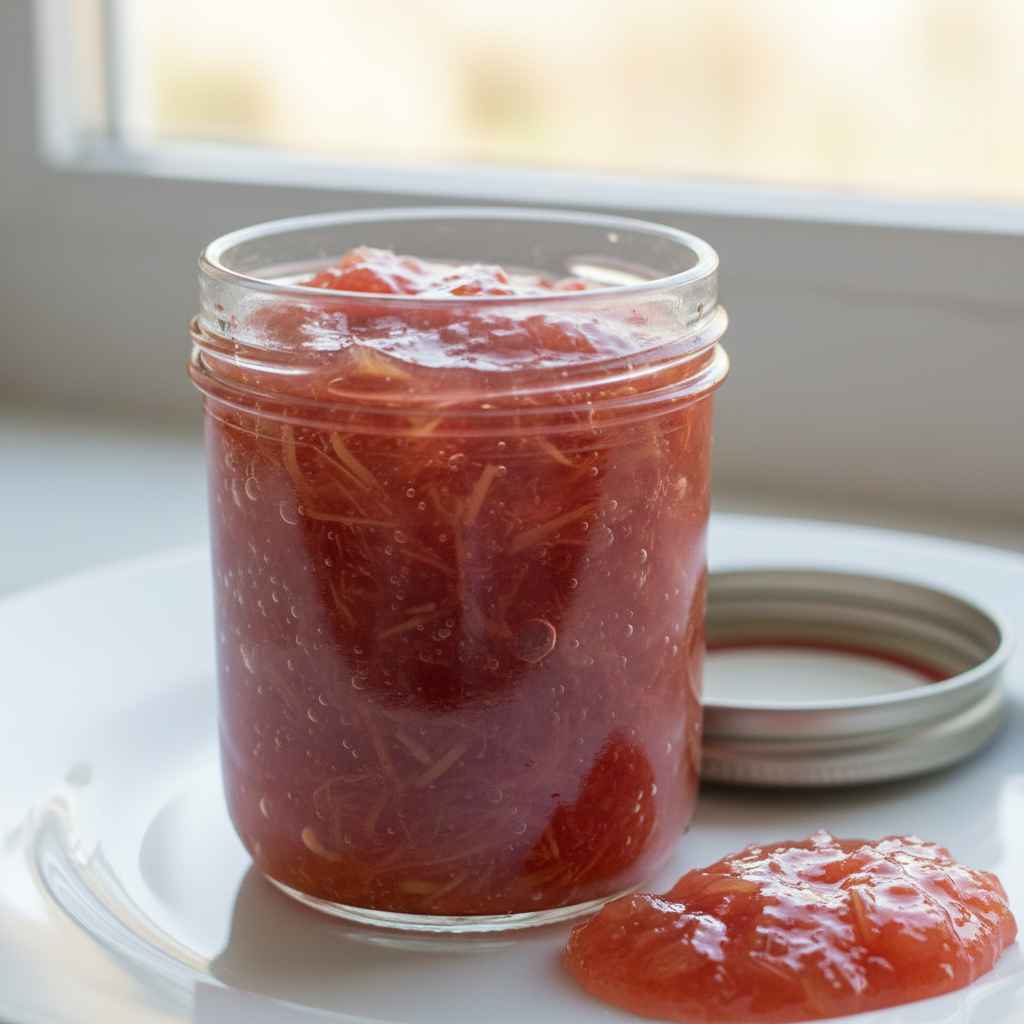
Simple Homemade Rhubarb Jam
Ingredients
Method
- Combine the chopped rhubarb, sugar, and water in a large, heavy-bottomed saucepan. Stir gently to combine.
- Place the saucepan over medium heat. Bring the mixture to a boil, stirring occasionally to dissolve the sugar completely. Once boiling, reduce the heat slightly to maintain a steady simmer.
- Simmer the mixture for about 20 to 25 minutes. The rhubarb will break down, and the mixture will begin to thicken. Stir frequently, especially near the end, to prevent scorching on the bottom of the pan.
- Test for setting point. Drop a small spoonful of jam onto a chilled plate. If it wrinkles when pushed with your finger (or reaches 220°F / 104°C), it is ready. If not, continue simmering for another 5 minutes and test again.
- Remove the pan from the heat and stir in the fresh lemon juice. The lemon juice brightens the flavor and aids in the setting process.
- Carefully skim off any foam that has formed on the surface using a spoon. Ladle the hot jam into sterilized jars, leaving about 1/4 inch headspace. Seal with lids and process in a boiling water bath for 10 minutes for shelf stability, or refrigerate immediately for short-term storage.