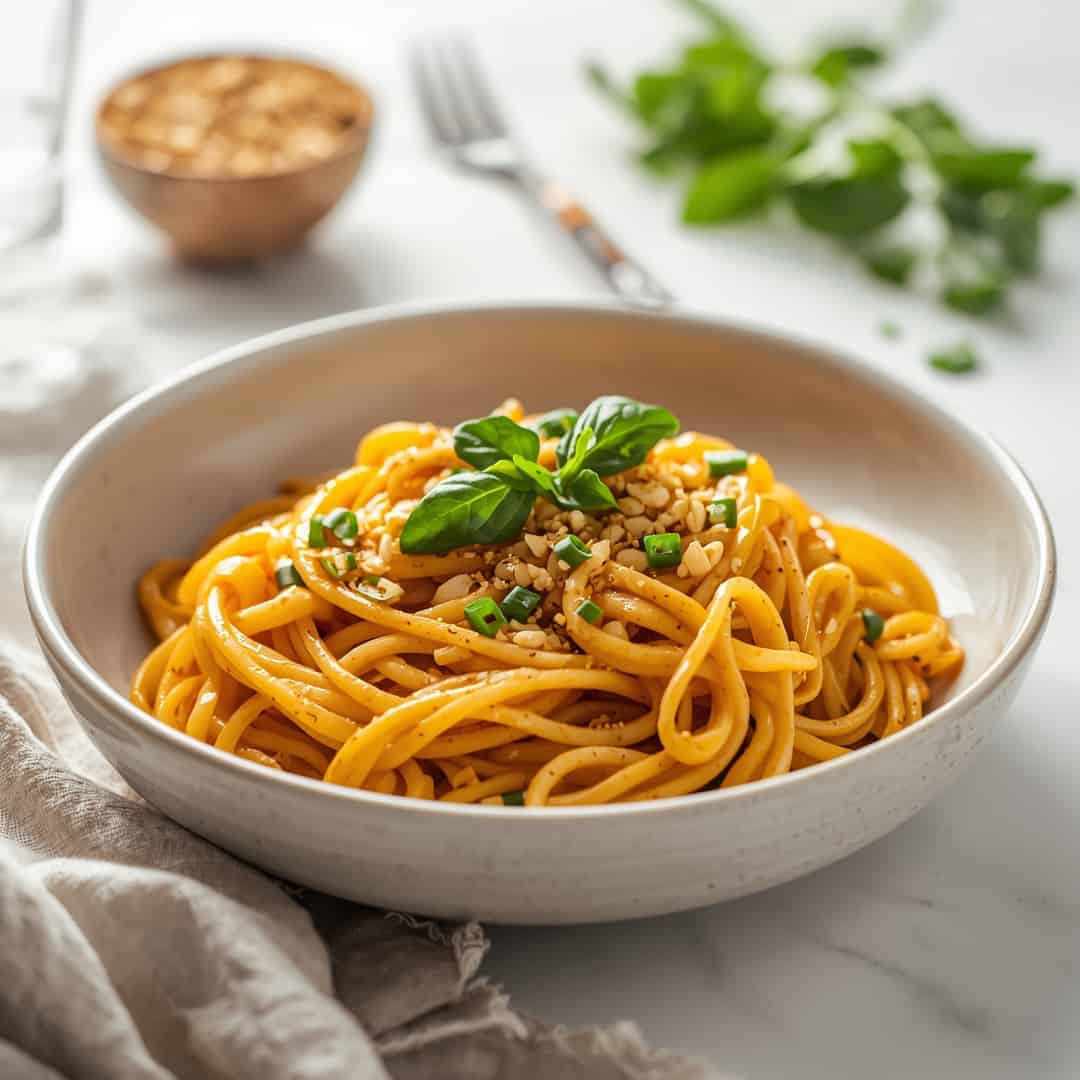
Ingredients
Equipment
Method
- In a large mixing bowl, whisk together the gluten-free all-purpose flour blend, tapioca starch, and salt. Ensure these dry ingredients are thoroughly combined to create an even base for your pasta dough. If your gluten-free flour blend doesn't contain xanthan gum, add it now and whisk well.gluten-free all-purpose flour blend, 1/2 cup tapioca starch, 1/4 teaspoon salt, 1 teaspoon xanthan gum
- Make a well in the center of your dry ingredients. Crack the four large eggs into this well. Add the 2 tablespoons of olive oil to the well with the eggs.4 large eggs, 2 tablespoons olive oil
- Using a fork, gently begin to whisk the eggs and olive oil in the center of the well. Gradually, start incorporating the dry ingredients from the edges into the wet ingredients. Continue mixing until a shaggy dough begins to form.
- Once the ingredients are mostly incorporated, turn the dough out onto a lightly floured surface (use your gluten-free flour blend). Knead the dough for about 5-7 minutes. The dough should become smoother and more elastic. It may still feel a little sticky, which is normal for gluten-free doughs; resist adding too much extra flour. If it's excessively sticky, add just a tablespoon of flour at a time.gluten-free flour blend
- Shape the kneaded dough into a ball, lightly oil the surface of the dough, and place it back into the mixing bowl. Cover the bowl with plastic wrap and let the dough rest at room temperature for at least 20 minutes. This resting period allows the gluten-free flours to hydrate fully, making the dough easier to work with.2 tablespoons olive oil
- Divide the rested dough into 2 or 3 portions for easier handling. On a lightly floured surface, roll out one portion of dough using a rolling pin. Roll it as thinly as you can, aiming for about 1/16th of an inch thick. You can also use a pasta maker if you have one, following its instructions for rolling. Dust the rolled-out dough lightly with tapioca starch to prevent sticking.tapioca starch
- Once the dough is rolled thinly, you can cut it into your desired noodle shapes. For classic egg noodles, you can fold the thinly rolled dough over itself a couple of times (without pressing down too hard) and then slice it into strips using a sharp knife. Alternatively, you can use a pizza cutter. For fettuccine-style noodles, aim for about 1/4 inch wide strips.
- Gently toss the cut noodles with a little more tapioca starch to stop them from sticking together. Lay them out on a clean baking sheet or a floured surface in a single layer for about 10-15 minutes to dry slightly before cooking. This helps them hold their shape better in the boiling water.tapioca starch
- Bring a large pot of salted water to a rolling boil. Carefully add the Easy Gluten-Free Egg Noodles to the boiling water. They will cook much faster than traditional wheat pasta, typically in 2-4 minutes. They are done when they float to the surface and are tender but still have a slight bite (al dente).
- Once cooked, drain the noodles well using a colander. You can then immediately toss them with your favorite sauce, butter, or oil to finish. Serve hot and enjoy your delicious, homemade gluten-free pasta!
Notes
To store, toss cooled noodles with olive oil and refrigerate in an airtight container for up to 2 days. For longer storage, freeze uncooked or cooked noodles. Uncooked frozen noodles can be stored for up to 1 month.
To reheat cooked noodles, warm gently with a little water or broth, or sauté in a pan with sauce. Reheat frozen noodles directly in boiling water or thaw overnight first.
