Ingredients
Equipment
Method
- Heat the olive oil in a large skillet or Dutch oven over medium heat. Add the diced pancetta or bacon and cook, stirring occasionally, until it’s crispy and golden brown. This usually takes about 5-7 minutes. Once crispy, add the minced garlic to the skillet and sauté for another minute until fragrant, being careful not to burn it. Remove the skillet from the heat and, using a slotted spoon, transfer the crispy pancetta and garlic to a small bowl, leaving any rendered fat in the skillet.1 tablespoon olive oil, 4 ounces pancetta or thick-cut bacon, diced, 3 cloves garlic, minced
- While the pancetta is cooking, bring a large pot of generously salted water to a rolling boil. Add the tortellini and cook according to package directions, usually about 3-4 minutes for fresh tortellini, or until they float to the surface and are tender but still al dente. Before draining, reserve about 1 cup of the starchy pasta water. Drain the tortellini well.1 pound fresh or refrigerated tortellini (any filling you prefer), to taste Salt (use sparingly, as pancetta/bacon and cheese are salty)
- In a medium bowl, whisk together the whole eggs and egg yolks until well combined. Add the grated Pecorino Romano cheese and grated Parmesan cheese to the egg mixture. Season generously with freshly ground black pepper. Whisk everything together until you have a thick, creamy paste.2 large eggs, at room temperature, 2 large egg yolks, at room temperature, 1/2 cup grated Pecorino Romano cheese, plus more for serving, 1/4 cup grated Parmesan cheese, plus more for serving, to taste Freshly ground black pepper
- Immediately after draining the tortellini, add them back into the skillet (off the heat). Pour the egg and cheese mixture over the hot tortellini. Working quickly, toss the tortellini vigorously with tongs to coat them evenly with the egg mixture. The residual heat from the tortellini and the skillet will cook the eggs and create a smooth, creamy sauce without scrambling them.1 pound fresh or refrigerated tortellini (any filling you prefer), 2 large eggs, at room temperature, 2 large egg yolks, at room temperature, 1/2 cup grated Pecorino Romano cheese, plus more for serving, 1/4 cup grated Parmesan cheese, plus more for serving
- If the sauce seems too thick, gradually add small amounts of the reserved pasta water, a tablespoon at a time, while continuing to toss, until you reach your desired creamy consistency. The starchy water will help emulsify the sauce and make it even more luscious.
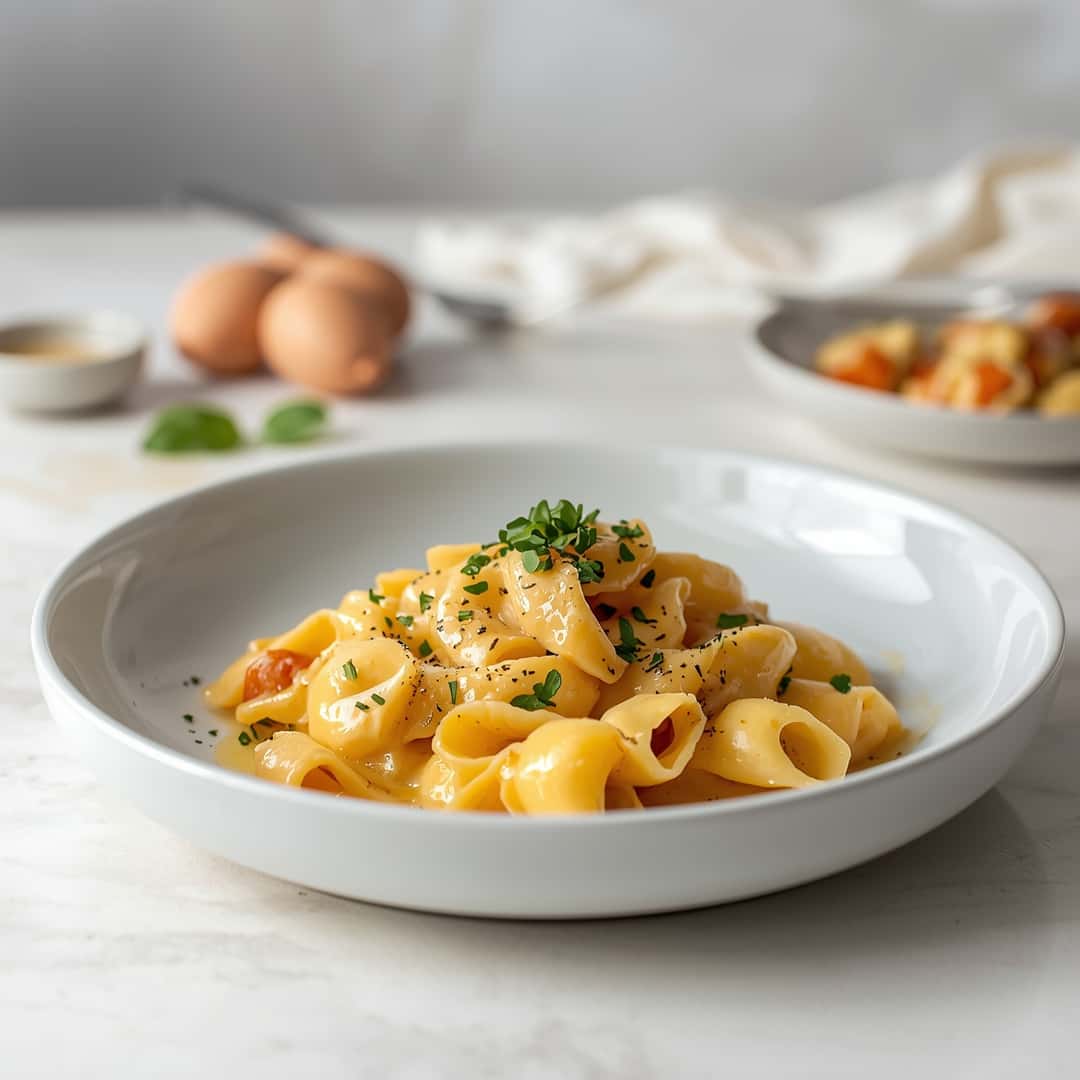
- Stir most of the crispy pancetta and garlic back into the tortellini and sauce. Taste and adjust seasoning with salt and pepper if needed. Serve the Tortellini Carbonara immediately, garnished with additional grated cheese, the remaining crispy pancetta and garlic, and fresh parsley if desired.4 ounces pancetta or thick-cut bacon, diced, 3 cloves garlic, minced, to taste Freshly ground black pepper, to taste Salt (use sparingly, as pancetta/bacon and cheese are salty), 1/4 cup chopped fresh parsley, for garnish (optional)
Notes
Properly storing and reheating your delicious Tortellini Carbonara Recipe will ensure you can enjoy its fantastic flavor even if you have leftovers. Refrigeration: Allow the tortellini carbonara to cool completely to room temperature. Transfer the leftovers to an airtight container. It can be stored in the refrigerator for up to 2-3 days. The sauce may thicken considerably as it cools. Reheating: The best way to reheat this dish is gently on the stovetop. Place the tortellini carbonara in a non-stick skillet over low to medium-low heat. Add a tablespoon or two of milk, cream, or even a splash of water to help loosen the sauce and prevent it from becoming dry or clumpy. Stir frequently until heated through. Avoid microwaving if possible, as it can sometimes lead to a rubbery texture. If you must use a microwave, heat in short intervals, stirring each time, and add a splash of liquid. Freezing: While fresh is best, you can freeze tortellini carbonara. Allow it to cool completely, then transfer to a freezer-safe container or a heavy-duty freezer bag. It can be frozen for up to 1-2 months. Thaw overnight in the refrigerator before reheating using the stovetop method described above. Be aware that the texture of the sauce may be slightly altered after freezing and thawing.
