
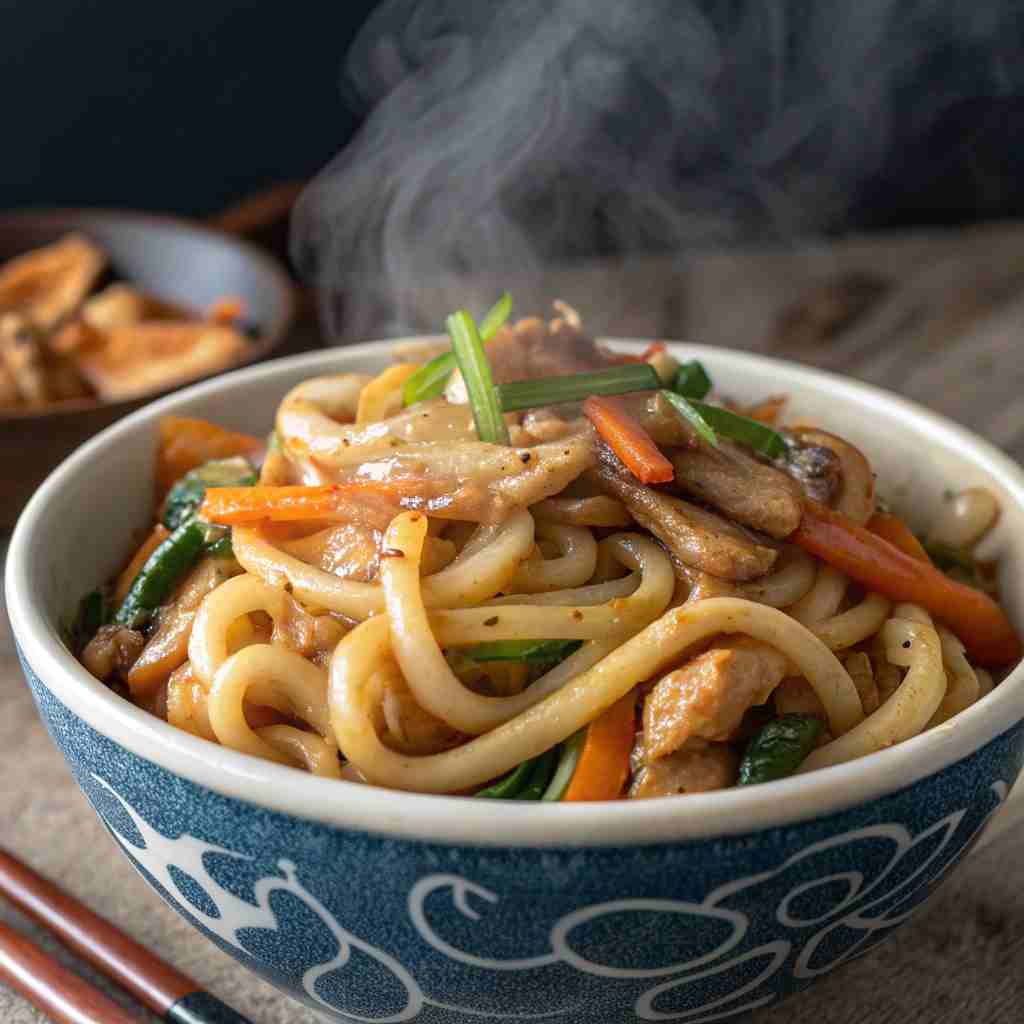
Craving a quick, easy, and absolutely delicious Japanese meal? Then you need The Best Yaki Udon – Japanese Stir-Fried Noodles in your life! This versatile recipe delivers a symphony of savory flavors, chewy udon noodles, and your choice of vibrant veggies and protein, all tossed in a tantalizingly sweet and savory sauce. Perfect for a weeknight dinner or a satisfying lunch, Yaki Udon is guaranteed to become a new household favorite.
What is Yaki Udon?
Yaki Udon, meaning “stir-fried udon,” is a popular Japanese noodle dish. Unlike its cousin, Yakisoba (which uses ramen-style noodles), Yaki Udon features thick, chewy udon noodles as its star. These noodles are stir-fried with a variety of ingredients, typically including meat (like pork or chicken), seafood (such as shrimp or squid), vegetables (cabbage, carrots, onions, bell peppers), and a flavorful sauce based on soy sauce, Worcestershire sauce, and other seasonings.
The result is a hearty and satisfying dish that’s both easy to make and incredibly customizable. You can adapt the ingredients to suit your preferences, making it a fantastic way to use up leftover vegetables and proteins. So, ditch the takeout menu and get ready to try your hand at making The Best Yaki Udon in your very own kitchen! The deliciousness awaits!
Key Ingredients for Yaki Udon:
- Udon Noodles (8 ounces): Pre-cooked, vacuum-packed udon noodles are ideal. If frozen, thaw them completely before using.
- Pork Belly (4 ounces): Thinly sliced is best, but ground pork or sliced chicken thighs can be substituted.
- Cabbage (1 cup): Roughly chopped. Adds a nice crunch.
- Carrot (1/2 cup): Julienned or thinly sliced. Provides sweetness and color.
- Onion (1/2 cup): Sliced. Adds a savory base flavor.
- Bell Pepper (1/2 cup): Sliced (any color). Contributes a vibrant color and slightly sweet flavor.
- Green Onions (2): Chopped, for garnish. Adds a fresh oniony bite.
- Vegetable Oil (2 tablespoons): For stir-frying.
- Soy Sauce (2 tablespoons): The base of the sauce, providing umami and saltiness.
- Worcestershire Sauce (1 tablespoon): Adds depth and tanginess to the sauce.
- Oyster Sauce (1 tablespoon): Enhances the umami flavor of the sauce. (Optional, but highly recommended)
- Mirin (1 tablespoon): Sweet Japanese rice wine, adds sweetness and balances the flavors.
- Sugar (1 teaspoon): To enhance the sweetness of the sauce.
- Sesame Oil (1 teaspoon): For flavor and aroma.
- Sesame Seeds (1 teaspoon): To garnish
- Bonito Flakes (optional): For garnish, adds a smoky, savory flavor (typically sprinkled on top right before serving (also know and Katsoubushi).
- Pickled Ginger (optional): For serving alongside. Adds tang and flavor.
How to Make Yaki Udon:
Yaki Udon is surprisingly easy to make and comes together in under 30 minutes. This recipe highlights simplicity and tastiness, creating a satisfying dish that’s perfect for a quick weeknight meal. The combination of chewy udon noodles, flavorful pork, and vibrant vegetables, all coated in a savory sauce, makes each bite unforgettable. Get ready for a restaurant-quality meal cooked in less than 30 minutes!
Step-by-Step Instructions:
Prepare the Ingredients: Slice the pork belly into thin strips. Chop the cabbage, julienne the carrot, and slice the onion and bell pepper. Chop the green onions for garnish.
Prepare the Sauce: In a small bowl, whisk together the soy sauce, Worcestershire sauce, oyster sauce (if using), mirin, sugar, and sesame oil. Set aside.
Cook the Pork: Heat 1 tablespoon of vegetable oil in a large skillet or wok over medium-high heat. Add the pork belly and cook until browned and crispy, about 3-5 minutes. Remove the pork from the skillet and set aside.
Stir-Fry the Vegetables: Add the remaining 1 tablespoon of vegetable oil to the skillet. Add the onion and carrot and stir-fry for 2-3 minutes, until slightly softened. Add the cabbage and bell pepper and stir-fry for another 2-3 minutes, until the vegetables are tender-crisp.
Add the Noodles and Pork: Add the cooked pork and udon noodles to the skillet. Gently loosen the noodles with chopsticks or tongs, separating them as much as possible.
Pour in the Sauce: Pour the prepared sauce over the noodles and vegetables. Toss everything together quickly and thoroughly to coat the noodles and ingredients evenly. Cook for 2-3 minutes, until the sauce has thickened slightly and the noodles are heated through.
Garnish and Serve: Remove from heat and garnish with chopped green onions, sesame seeds and bonito flakes, if using. Serve immediately. You can serve with a side of pickled ginger if desired.
Why You’ll Love This Yaki Udon:
This Yaki Udon recipe stands out because of its incredibly flavor balanced sauce. The combination of soy sauce, Worcestershire sauce, oyster sauce, and mirin creates a savory-sweet umami bomb that perfectly coats the chewy udon noodles and fresh vegetables. Making Yaki Udon at home is a huge cost saver compared to ordering takeout. You can control the quality of the ingredients and often make a larger portion for less money. The ability to customize the recipe with your favorite vegetables and proteins makes it a versatile and satisfying meal. If you enjoy this recipe, consider trying Yakisoba similar to Yaki Udon but using ramen noodles. Ready to skip the takeout and enjoy a delicious homemade meal that will make your taste buds happier? Try this super easy Yaki Udon at home today!
What to Serve Yaki Udon With:
Yaki Udon makes a fantastic stand-alone meal, but you can enhance your dining experience with some complementary dishes:
- Miso Soup: A classic Japanese soup that balances the savory flavors of Yaki Udon.
- Edamame: Steamed and salted soybeans, a simple and healthy appetizer.
- Japanese Pickles (Tsukemono): Provide a refreshing and tangy counterpoint to the richness of the noodles.
- Japanese Salad with Ginger Dressing: A light and refreshing salad that cleanses the palate.
- Japanese Beer or Sake: Complement the flavors of the dish perfectly.
Top Tips for Perfecting Yaki Udon:
- Don’t Overcook Those Noodles: Overcooked udon can become mushy. Aim for chewy, not soft.
- High Heat is Key: Stir-frying requires high heat to quickly cook the ingredients and create a slightly charred flavor.
- Prepare Ingredients in Advance: Stir-frying is a fast process, so have all your ingredients prepped and ready to go before you start cooking.
- Adjust the Sauce to Your Taste: Feel free to adjust the ratios of soy sauce, Worcestershire sauce, and other seasonings to suit your preference.
- Don’t Overcrowd the Pan: Overcrowding the pan will lower the temperature and cause the ingredients to steam instead of stir-fry. Work in batches if necessary.
- Vegetable choice : You can use almost any sliced vegetables, if you like it with beansprout taste, you are more than welcome to add that, this would be your style of cooking.
Health Benefits of Yaki Udon:
Yaki Udon can be a relatively healthy meal depending on the ingredients you choose. Udon noodles are a good source of carbohydrates for energy. The vegetables provide essential vitamins, minerals, and fiber.
Lean protein sources like pork belly or chicken breast contribute to satiety. However, be mindful of the sodium content of the sauce. You can reduce sodium by using low-sodium soy sauce and limiting the amount of oyster sauce. Also, focusing on adding a variety of vegetables can help your dish be high in nutrients and healthy for you.
Storing and Reheating Tips:
- Storing: Allow the Yaki Udon to cool completely before storing. Transfer it to an airtight container and refrigerate for up to 3-4 days.
- Reheating: Reheat the Yaki Udon in a skillet or wok over medium heat, adding a splash of water or broth to prevent it from drying out. Alternatively, you can microwave it in 1-minute intervals, stirring in between, until heated through. Reheating for too long will have the noodles turn into mush.
- Freezing: While not ideal, Yaki Udon can be frozen for up to 1 month. The texture of the noodles may change slightly after thawing. To freeze, spread the cooled Yaki Udon in a single layer on a baking sheet and freeze until solid. Then, transfer to a freezer-safe bag or container. Thaw in the refrigerator overnight before reheating.
Final Thoughts:
This Yaki Udon recipe is a testament to the fact that delicious and satisfying meals don’t have to be complicated. With its customizable ingredients, easy preparation, and incredible flavor, it’s a dish that’s perfect for any occasion. Give it a try, experiment with your favorite ingredients, and discover your own version of The Best Yaki Udon!
try also : Easy Pumpkin Dump Cake Recipe and find more in pinterest
Yaki Udon FAQs:
Q: Can I use different types of noodles?
A: While udon noodles are traditionally used in Yaki Udon, you can experiment with other types of noodles such as yakisoba noodles, ramen noodles, or even spaghetti in a pinch. However, the texture and flavor will be slightly different.
Q: Can I make this vegetarian?
A: Absolutely! Simply omit the pork belly and substitute with tofu, mushrooms, or extra vegetables.
Q: Can I add spice to this dish?
A: Yes! Add a pinch of red pepper flakes to the sauce or stir in a drizzle of sriracha before serving.
Q: I don’t have oyster sauce, can I still make this?
A: Yes, the oyster sauce enhances the richness of the flavor, but you can still make the Yaki Udon. Just the flavor might not be as rich.
Q: Can I prepare the sauce ahead of time?
A: Yes, you can prepare the sauce up to a day ahead of time and store it in an airtight container in the refrigerator.
Q: What if I don’t have mirin?
A: You can substitute with dry sherry or rice vinegar mixed with a little sugar.